Introduction: Why Digital Strategy Matters More Than Ever
In today’s digital-first world, consumer behavior has shifted dramatically. More than ever, people are searching, researching, and making buying decisions online—often before they ever speak to a salesperson or step into a store. Whether it’s comparing prices, reading reviews, or browsing social media, the journey to purchase is now shaped almost entirely by digital interactions. For small businesses, this shift presents both a massive opportunity and a major challenge.
The opportunity? Digital tools allow even the smallest businesses to compete on the same platforms as global brands—without needing the same budget. A well-executed digital presence can help a local service provider outrank big-name competitors in search results, attract highly targeted leads, and build loyal customer relationships that convert. The challenge? Without a clear plan—what we call a digital strategy—it’s easy to waste time, money, and energy on disconnected efforts that don’t drive real results.
That’s why having a focused small business digital strategy is no longer optional—it’s essential. In this article, we’ll break down exactly what digital strategy means, how it differs from digital marketing, and why the two must work together. You’ll also discover practical ways small businesses can use digital tools to grow smarter—from building a better website, to leveraging SEO, social media, email marketing, paid ads, and analytics.
By the end, you’ll have a clear action plan to turn your digital presence into a powerful growth engine—regardless of your size or industry.
Understanding Small Business Digital Strategy
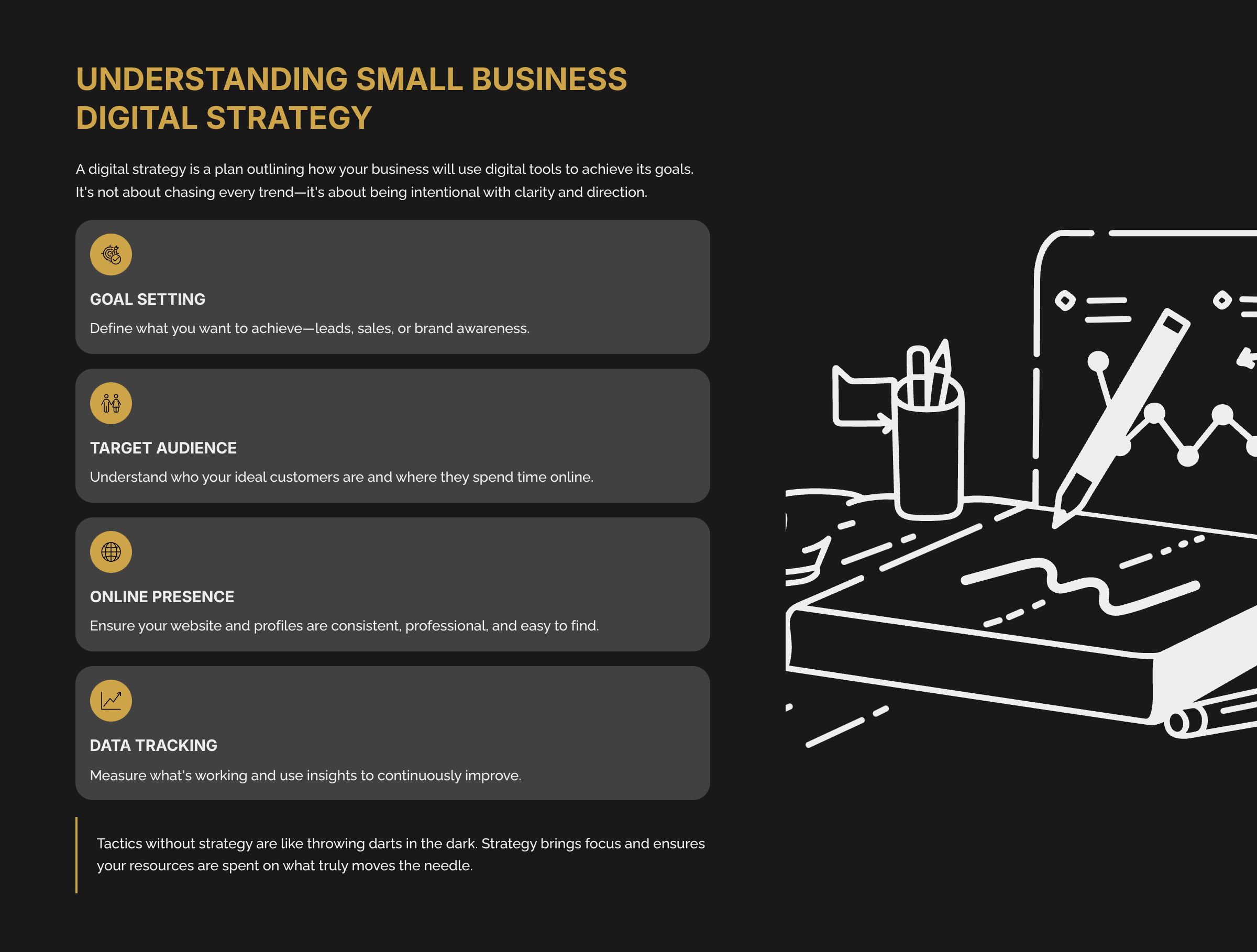
A digital strategy is simply a plan that outlines how your business will use digital tools to achieve its goals. It’s not about chasing every new trend or being on every platform — it’s about being intentional. For small businesses, a digital strategy provides clarity and direction, ensuring that every action taken online is aligned with a bigger picture.
A solid small business digital strategy is built on four key components. First, goal setting — knowing exactly what you want to achieve, whether that’s generating more leads, increasing online sales, or building brand awareness. Second, target audience clarity — understanding who your ideal customers are, what problems they’re trying to solve, and where they spend time online. Third, online presence optimization — ensuring your website, social profiles, and digital listings are consistent, professional, and easy to find. Finally, data tracking and continuous improvement — measuring what’s working, what’s not, and using those insights to adjust and improve over time.
Too many small businesses jump straight into tactics—like running ads or posting on Instagram—without a clear strategy behind them. But tactics without strategy are like throwing darts in the dark. You might hit something, but you’re not aiming with intention. A digital strategy brings focus, helps you make better decisions, and ensures your time and resources are spent on what truly moves the needle.
Before you post, advertise, or automate—start with strategy. It’s the foundation for sustainable, scalable digital growth.
What Is Digital Marketing?
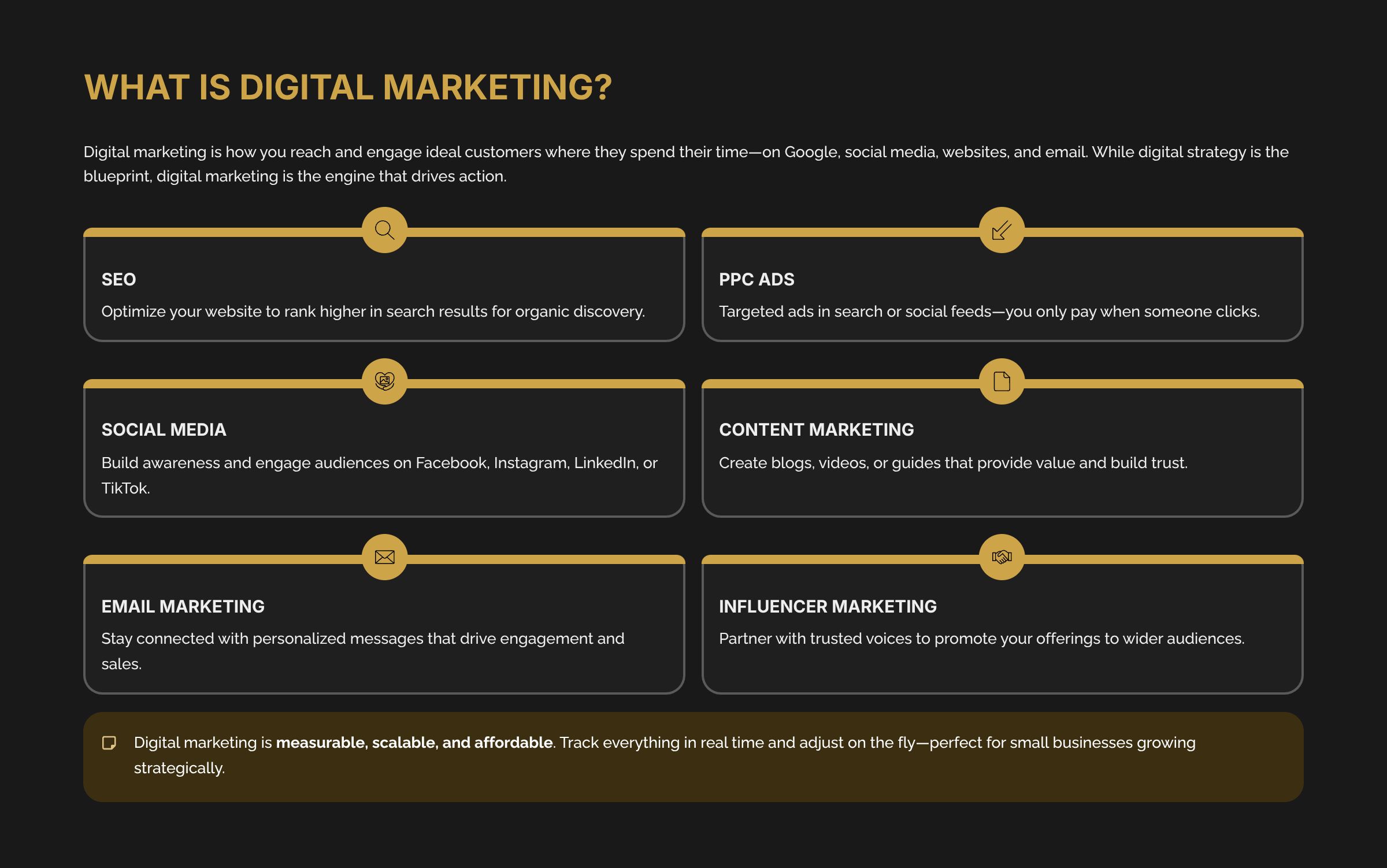
Digital marketing is the process of promoting your business, products, or services using online platforms and digital channels. It’s how you reach and engage with your ideal customers where they already spend their time—on Google, social media, websites, and email. While digital strategy is the blueprint, digital marketing is the engine that drives action.
For small businesses, some of the most powerful and cost-effective digital marketing tactics include:
- Search Engine Optimization (SEO): Optimizing your website to rank higher in search results so more people can discover you organically.
- Pay-Per-Click Ads (PPC): Targeted ads that appear in search results or social feeds—you only pay when someone clicks.
- Social Media Marketing: Using platforms like Facebook, Instagram, LinkedIn, or TikTok to build awareness, engage your audience, and promote offers.
- Content Marketing: Creating blogs, videos, or guides that provide value, answer questions, and build trust with potential customers.
- Email Marketing: Staying connected with leads and customers through personalized, timely messages that drive engagement and sales.
- Influencer & Affiliate Marketing: Partnering with individuals or platforms who already have your audience’s trust to promote your offerings.
One of the biggest advantages of digital marketing is that it’s measurable, scalable, and affordable. You can track everything in real time—what’s working, what’s not—and adjust on the fly. This makes it especially powerful for small businesses looking to grow strategically without wasting resources. Digital marketing puts you in control of your growth.
Digital Strategy vs Digital Marketing: What’s the Difference?
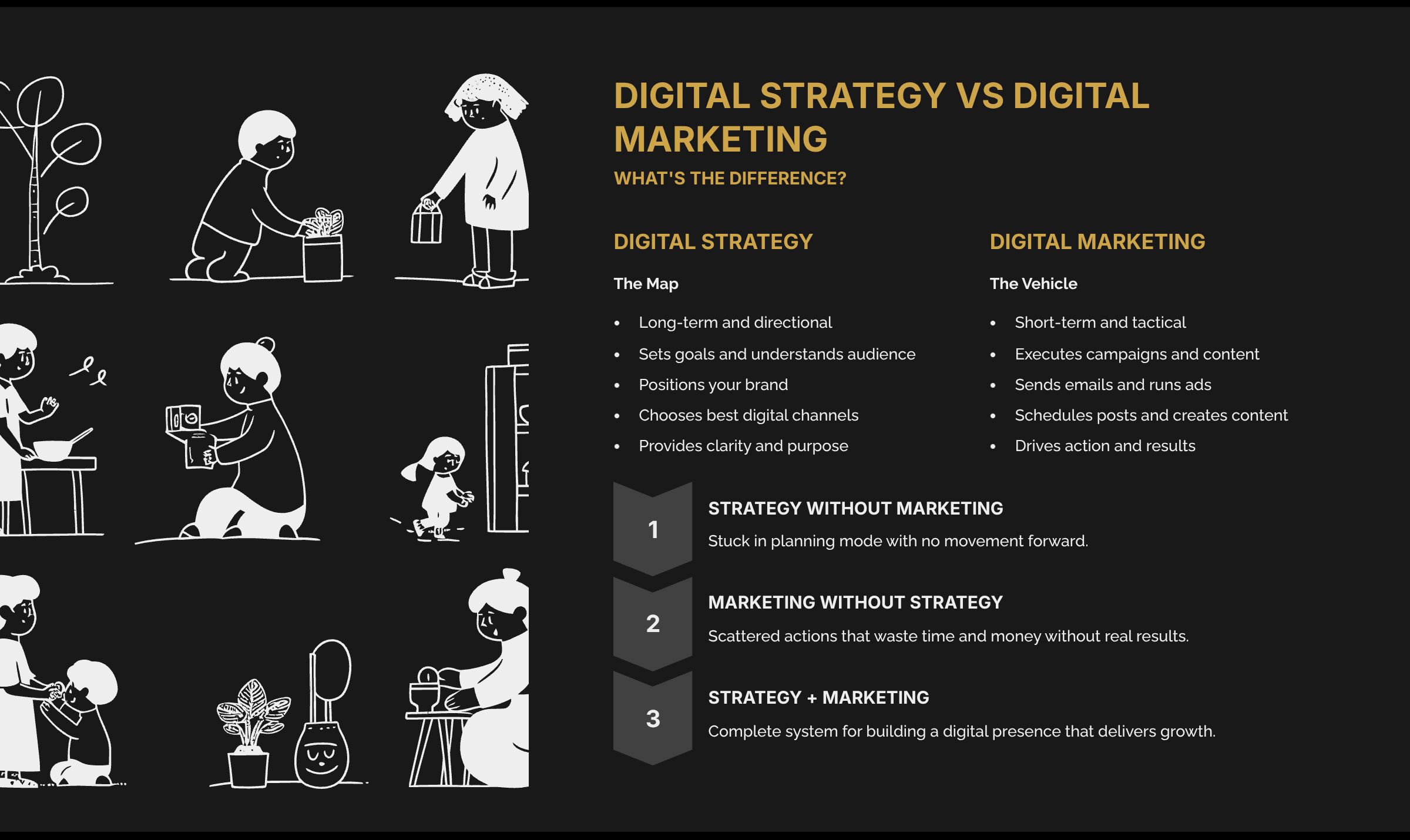
Think of your business like a road trip. Your digital strategy is the map—it tells you where you’re going, why you’re going there, and the best route to get there. Digital marketing, on the other hand, is the vehicle—it’s what moves you forward toward your destination. Without a map, you might waste fuel going in circles. Without a vehicle, your plan never leaves the page.
A digital strategy is long-term and directional. It focuses on setting goals, understanding your audience, positioning your brand, and choosing the best digital channels to reach your objectives. It’s the foundation that informs every marketing decision you make. It helps you stay aligned, focused, and intentional.
Digital marketing is more short-term and tactical. It’s about execution—the emails you send, the ads you run, the posts you schedule, and the content you create. These are the tools and campaigns that deliver your message, attract leads, and drive sales. But without strategy, these actions can feel scattered or disconnected.
When businesses skip strategy and jump straight into marketing, they often waste time and money on tactics that don’t lead to real results. On the flip side, having a strategy but never executing it means you stay stuck in planning mode with no movement.
To grow consistently, you need both. Strategy gives you clarity and purpose. Marketing puts that purpose into action. Together, they form a complete system for building a digital presence that actually delivers business growth.

7 Ways to Use Digital Strategy & Marketing to Grow Your Small Business
1. Build a professional, mobile-optimized website
Your website is your digital storefront. It should load fast, look clean, and guide visitors toward clear actions (like calling, booking, or buying). A mobile-friendly site is non-negotiable—most visitors browse on phones.
2. Use SEO to attract organic traffic for free
Search Engine Optimization (SEO) helps your business show up when potential customers search for solutions you offer. Optimizing your website for local and relevant keywords can bring in a steady stream of qualified leads without paying for ads.
3. Engage consistently on 1–2 social media platforms
Don’t try to be everywhere. Choose the platforms where your audience already spends time—whether it’s Instagram, Facebook, or LinkedIn—and show up consistently with content that educates, entertains, or solves problems.
4. Leverage email marketing to nurture and convert leads
Email remains one of the highest-converting channels. Use it to send value-packed updates, special offers, and educational content that keeps your business top-of-mind and builds trust over time.
5. Use data & analytics to guide decisions, not assumptions
Track your website traffic, social engagement, ad performance, and email metrics. This data helps you double down on what’s working and quickly fix what’s not—making your marketing smarter over time.
6. Partner with influencers or affiliates to expand your reach
Leverage trusted voices in your niche to introduce your brand to wider audiences. Influencer and affiliate marketing can help build credibility and drive referrals.
7. Run paid ads for high-intent traffic and fast testing
Use Google Ads or Meta Ads to get your offer in front of people actively looking. Paid ads also let you test messaging and offers quickly, speeding up your growth.
Common Mistakes Small Businesses Make (and How to Avoid Them)
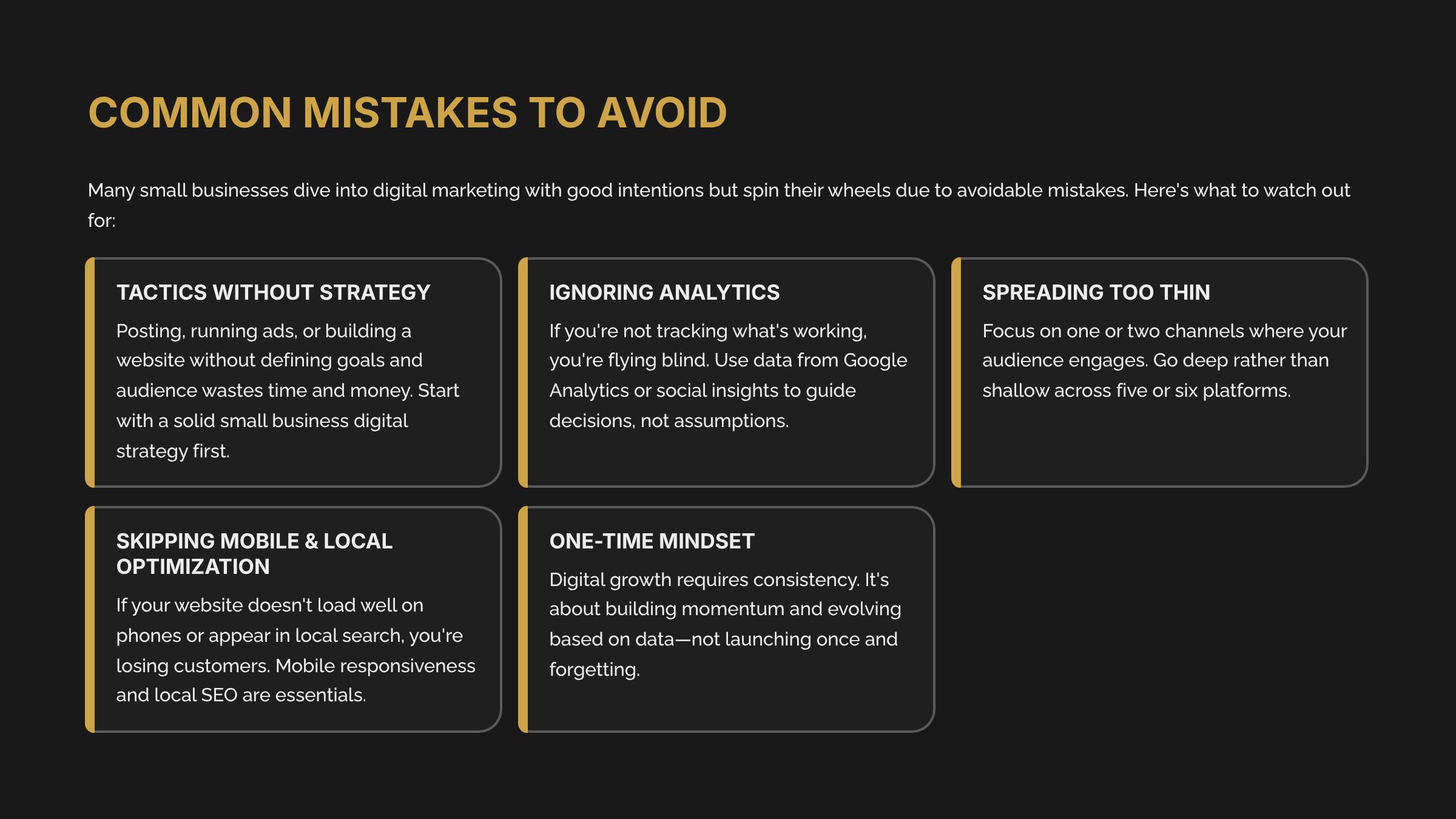
Many small businesses dive into digital marketing with good intentions but end up spinning their wheels due to a few avoidable mistakes. One of the biggest errors is doing tactics without a clear strategy. Posting on social media, running ads, or building a website without first defining your goals and audience often leads to wasted time and money. Start with a solid small business digital strategy before jumping into execution.
Another common mistake is ignoring analytics. If you’re not tracking what’s working, you’re flying blind. Whether it’s website traffic, email open rates, or ad performance, data should guide your decisions—not assumptions. Even simple tools like Google Analytics or social media insights can provide powerful feedback to improve results.
Some businesses also spread themselves too thin across too many platforms. It’s tempting to be everywhere at once, but it’s better to focus on one or two channels where your audience actually engages and go deep, rather than shallow across five or six.
Not optimizing for mobile or local search is another missed opportunity. If your website doesn’t load well on phones or doesn’t appear in local search results, you’re likely losing customers without even realizing it. Local SEO and mobile responsiveness are essentials, not extras.
Lastly, treating digital marketing as a one-time task is a critical misstep. Digital growth requires consistency. It’s not about launching a campaign once—it’s about building momentum and evolving based on what the data tells you. Stay committed, stay flexible, and keep improving.
Conclusion: Take Advantage of the Digital Advantage
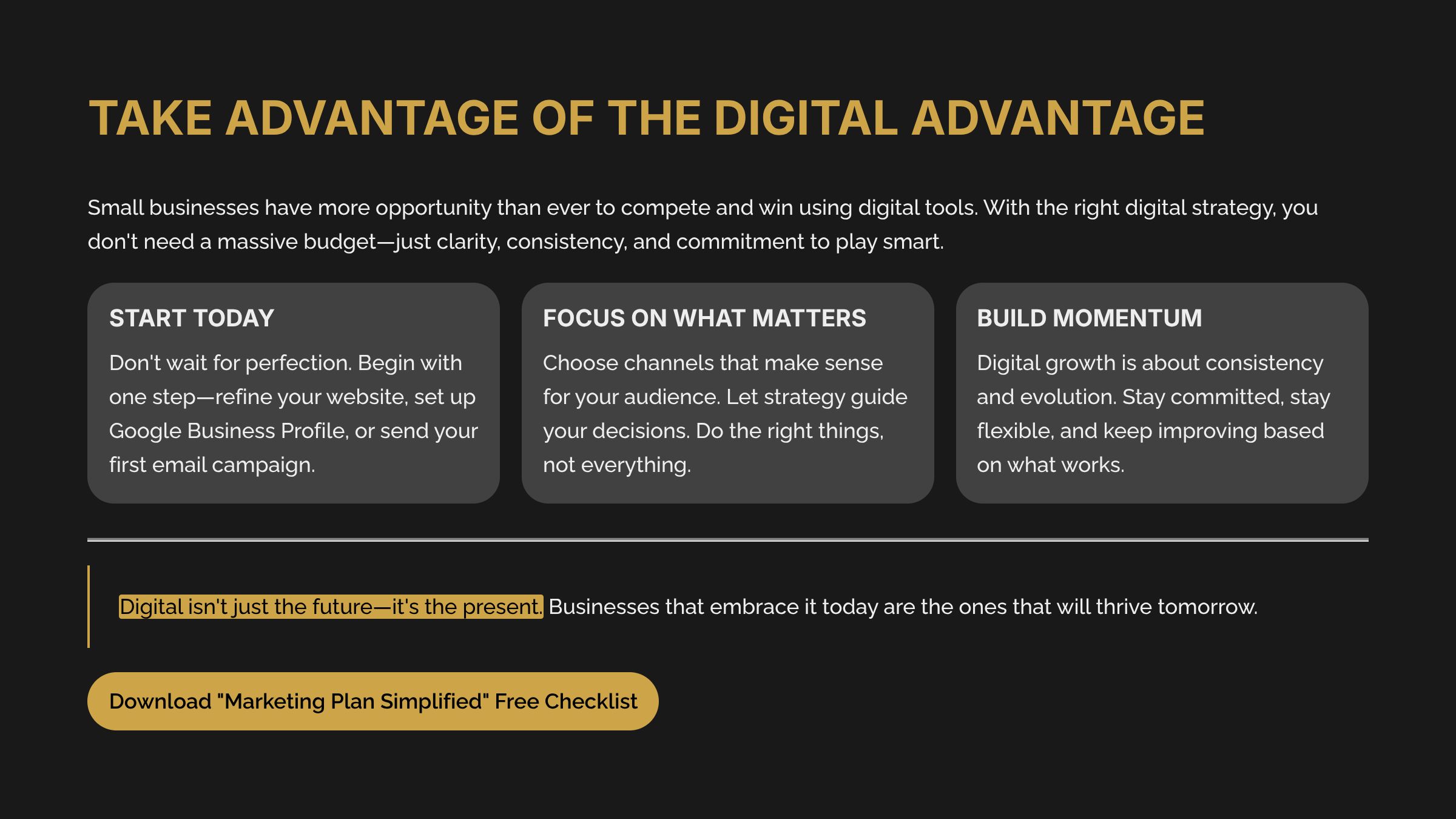
In today’s hyper-connected world, small businesses have more opportunity than ever to compete—and win—using digital tools. With the right digital strategy in place, you don’t need a massive budget or a big team to build real momentum. You just need clarity, consistency, and the commitment to play smart. Whether you’re a local service provider or an eCommerce brand, a strong small business digital strategy can help you show up where it matters, attract the right customers, and grow predictably over time.
The key is to start. Don’t wait until everything is perfect. Begin with one step—maybe it’s refining your website, setting up a Google Business Profile, or sending your first email campaign. Then build from there. Focus on the channels that make the most sense for your audience, and let strategy guide your decisions. You don’t need to do everything—just the right things.
To help you get started, I’ve created a free checklist that breaks down everything you need into clear, actionable steps. It’s designed specifically for small business owners who want to grow online without the overwhelm. You can download it right now using the form below this article.
Remember, digital isn’t just the future—it’s the present. And businesses that embrace it today are the ones that will thrive tomorrow. So take advantage of the digital advantage—and start building a strategy that works for you.
Download Marketing Plan Simplified Checklist