Effective Business Scaling Frameworks for Predictable Growth
December 4, 2025
Introduction
In the dynamic realm of entrepreneurship, the terms business growth and business scaling frequently intertwine, leading to common misconceptions. Understanding their distinct differences is crucial for any entrepreneur seeking long-term success and sustainability. Business growth typically involves an increase in revenue, customer base, or market share and comes with proportional rises in resources like operational costs and workforce. This approach, while valuable, can often lead to inefficiencies and resource strain.
Conversely, business scaling is about optimizing processes and improving efficiency to expand output and revenue without a corresponding increase in costs. This allows businesses to grow sustainably, minimizing the burden on resources while maximizing profitability. Companies that master the art of scaling often invest in automation and establish robust operational systems, enabling them to meet rising customer demand seamlessly.
By discerning the nuances between growth and scaling, entrepreneurs can align their strategies with their long-term goals, avoiding the pitfalls of resource-intensive growth models. This article will delve deeper into the key differences, providing insights into how businesses can effectively leverage scaling principles for sustained expansion in a competitive marketplace. Understanding these concepts empowers entrepreneurs to make informed decisions that not only foster immediate success but also ensure resilience and adaptability for the future of their ventures.
Before we go any further, I want you to stay with me until the very end, because I’m going to give you a free resource that shows you how to turn chaos into calm using simple systems that actually scale. Most people skip systems. That’s why they get stuck.
Understanding the Difference Between Business Growth and Business Scaling
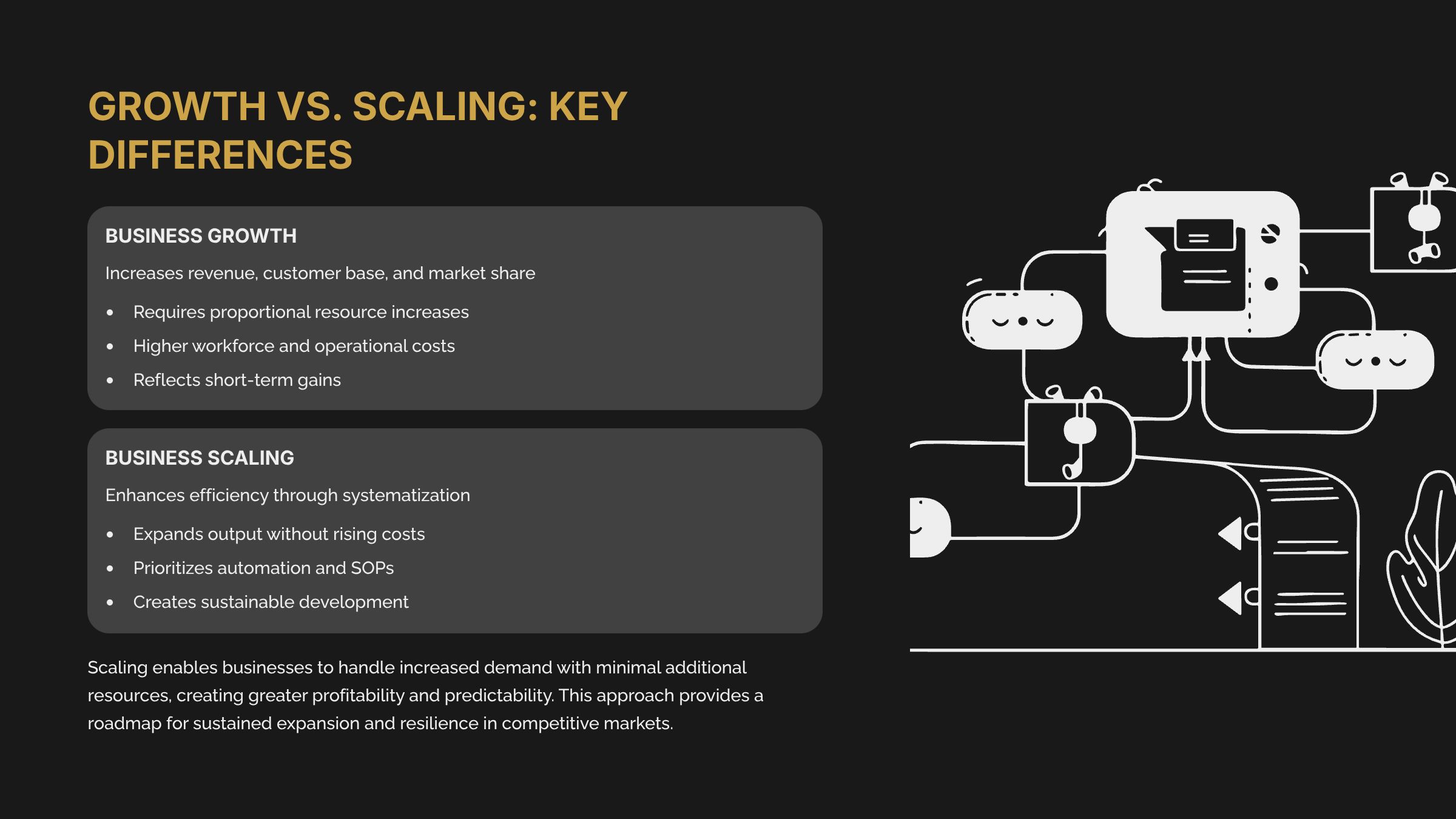
Business growth and business scaling are often confused, yet they represent distinct concepts within the entrepreneurial landscape. Business growth refers to a company's increase in revenue, customer base, or market share, typically requiring proportional increases in resources, such as workforce and operational costs. In contrast, business scaling focuses on enhancing efficiency through systematization and optimized processes.
Scaling allows companies to expand their output and revenue without a corresponding rise in costs, creating a more sustainable model for development. Businesses that scale successfully prioritize automation, standard operating procedures, and robust infrastructure, ensuring that growth is manageable and maintainable. For example, an efficient scaling model enables businesses to handle increased demand with minimal additional resources, allowing for greater profitability and predictability.
Understanding the nuances between growth and scaling is essential for entrepreneurs aiming for long-term success. While growth may reflect short-term gains, scaling provides a roadmap for sustained expansion and resilience in a competitive marketplace. Ultimately, recognizing these differences empowers businesses to make informed strategic decisions that align with their operational capabilities and growth ambitions. By leveraging the principles of scaling, companies can position themselves for ongoing success without falling into the trap of resource-intensive growth models.
Why Business Scaling Matters for Long-Term Success
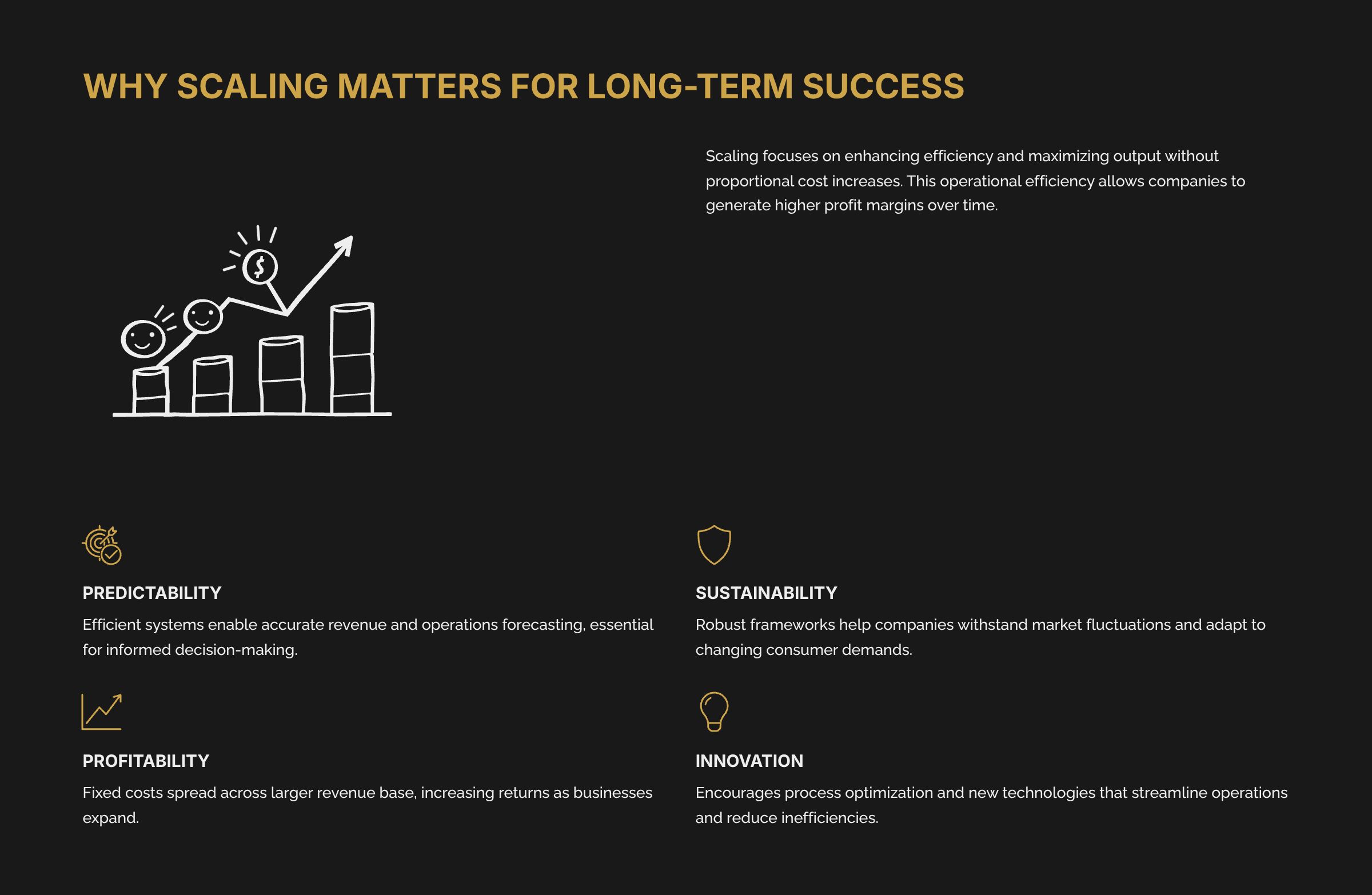
Business scaling is an essential strategy for organizations aiming to achieve sustainable growth. Unlike mere business growth, which typically involves increasing revenues and resources at a proportional rate, scaling focuses on enhancing efficiency and maximizing output without a corresponding rise in costs. This principle of operational efficiency allows companies to generate higher profit margins over time.
One of the primary benefits of scaling is predictability. Establishing efficient systems enables businesses to forecast revenue and operations with greater accuracy, which is essential for informed decision-making. Furthermore, scalability fosters sustainability; by creating robust frameworks, companies can withstand market fluctuations and adapt to changing consumer demands, ensuring longevity in competitive environments.
Profitability is another critical advantage. Scalable businesses often experience increased returns as they expand, as fixed costs are spread across a larger revenue base. Moreover, scaling promotes innovation by encouraging companies to optimize their processes and implement new technologies that streamline operations and reduce inefficiencies.
In summary, business scaling is vital for organizations seeking long-term success. By prioritizing efficiency, establishing established systems, and enhancing profitability, companies are better positioned to adapt to market changes and secure a sustainable future. Emphasizing scaling over simple growth can lead to significant rewards and a more resilient business model.
Core Elements of Effective Business Scaling Frameworks
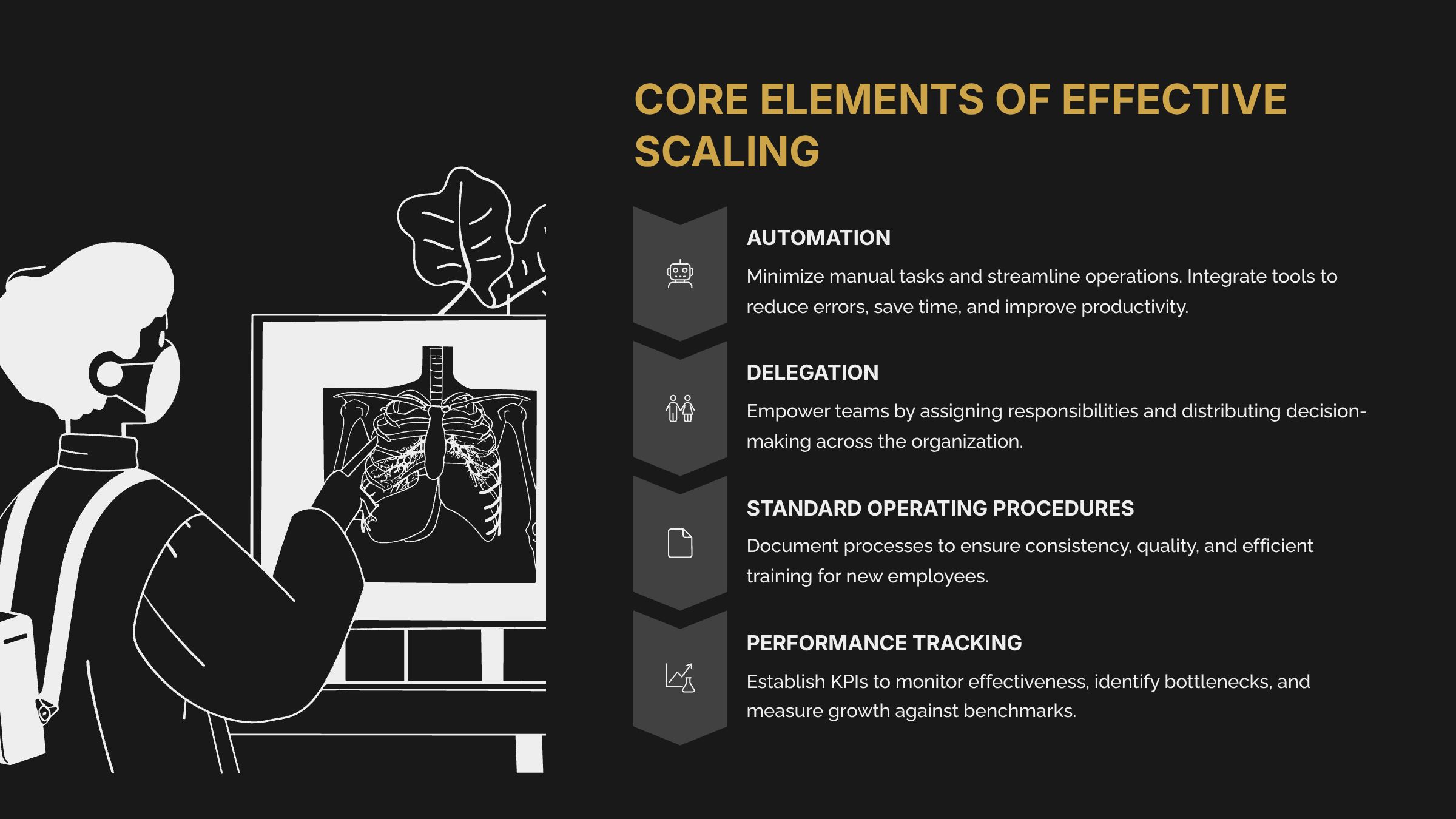
To establish a successful scaling strategy, businesses must focus on several core elements that enhance efficiency and foster growth. Automation is vital, allowing organizations to minimize manual tasks and streamline operations. By integrating tools and technology, businesses can reduce errors, save time, and improve overall productivity.
Another crucial aspect is delegation. Effective scaling requires leaders to empower their teams by assigning responsibilities and ensuring that decision-making is distributed across the organization. This not only fosters a sense of ownership among employees but also allows leaders to focus on strategic initiatives.
Standard Operating Procedures (SOPs) form another essential component in scaling frameworks. These documented processes provide clear guidelines for tasks, ensuring consistency and quality across operations. SOPs enhance training efficiency, enabling new employees to onboard quickly and contribute meaningfully.
Performance tracking is indispensable for ongoing success in scaling. Key Performance Indicators (KPIs) should be established to monitor the effectiveness of processes, identify bottlenecks, and measure growth against established benchmarks. Regular analysis of these metrics can inform adjustments and enable continuous improvement.
By focusing on these core elements—automation, delegation, SOPs, and performance tracking—businesses can create a robust framework for scaling. This structured approach not only supports efficiency but also sets the foundation for sustainable growth in a competitive market.
Popular Business Scaling Models Used by Successful Companies
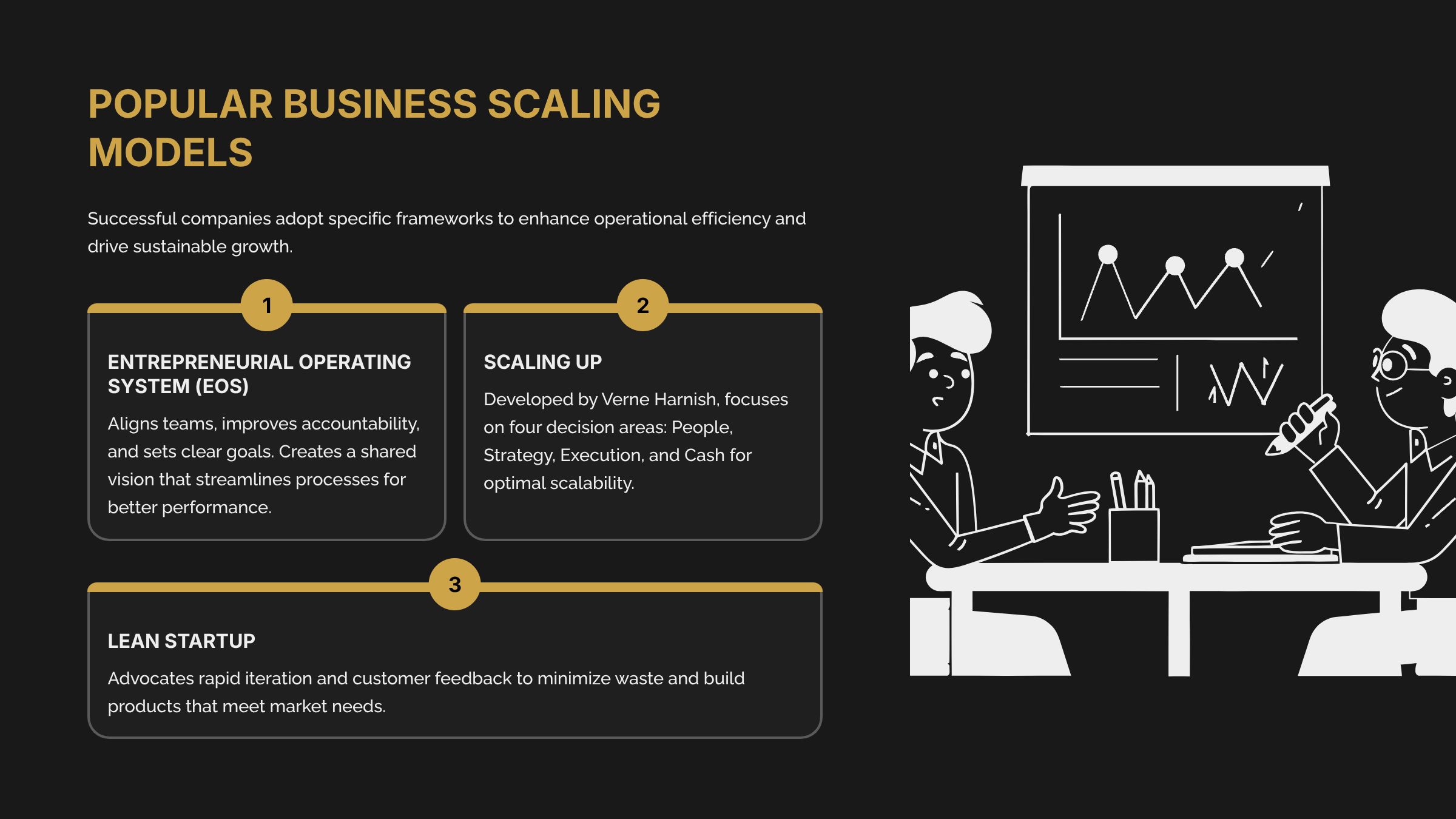
Successful companies often adopt specific business scaling models to enhance their operational efficiency and drive sustainable growth. One prominent framework is the Entrepreneurial Operating System (EOS), which focuses on aligning teams, improving accountability, and setting clear goals. This model emphasizes the importance of creating a vision that everyone in the organization can understand and contribute towards, ultimately streamlining processes for better performance.
Another notable framework is "Scaling Up," developed by Verne Harnish. This model concentrates on four major decision areas: People, Strategy, Execution, and Cash. By optimizing these elements, businesses can increase their scalability through effective talent management, strategic planning, rigorous execution of tasks, and sound financial practices.
The Lean Startup methodology is also increasingly popular among entrepreneurs aiming to scale effectively. It advocates for rapid iteration and customer feedback to minimize waste and build products that genuinely meet market needs. This approach enables businesses to stay adaptable and responsive, facilitating smoother transitions as they expand operations.
Incorporating these proven business scaling models allows companies to streamline processes, improve customer satisfaction, and enhance overall efficiency. Leveraging such frameworks not only prepares businesses for growth but also establishes a sustainable pathway to long-term success in an ever-evolving marketplace. By understanding and implementing these models, organizations can be better positioned to achieve their scaling objectives.
Applying the 6 Dimensions BOS to Build a Scalable Business
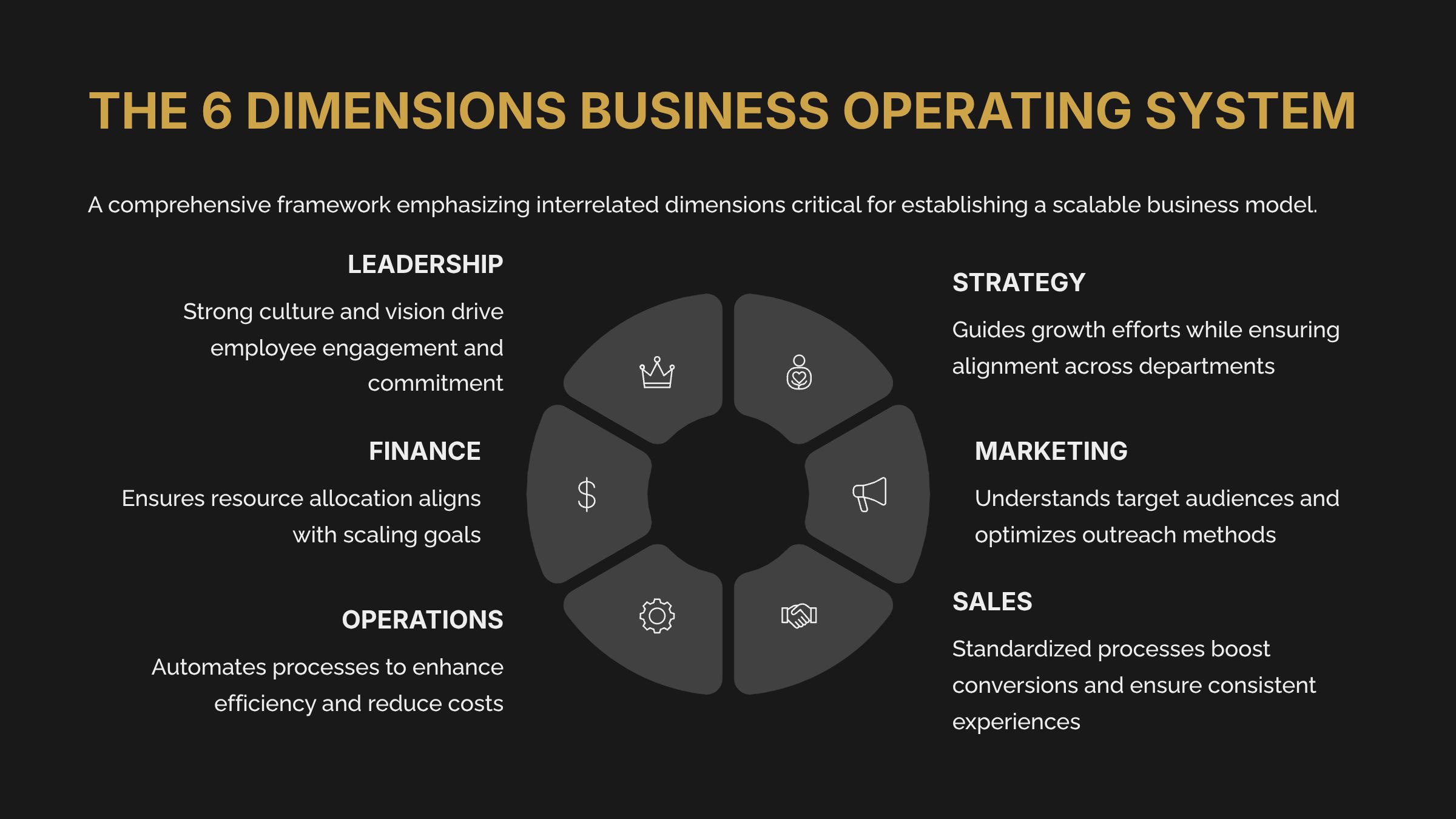
The 6 Dimensions Business Operating System (BOS) provides a comprehensive framework for organizations aiming to scale effectively. This approach emphasizes interrelated dimensions: leadership, strategy, marketing, sales, operations, and finance, which play critical roles in establishing a scalable business model.
In the leadership dimension, strong organizational culture and vision drive employee engagement and commitment. A well-defined strategy guides growth efforts while ensuring alignment across departments, which is essential for long-term success. Marketing focuses on understanding target audiences and optimizing outreach methods, enabling businesses to efficiently attract and retain customers.
Sales effectiveness is enhanced through standardized processes that not only boost conversions but also ensure consistent customer experiences. Operational excellence hinges on automating processes, which enhances efficiency and reduces costs. Finally, financial management ensures resource allocation aligns with scaling goals, promoting sustainability.
Integrating these six dimensions ensures that businesses build a solid foundation for growth. By systematically addressing each dimension, organizations can effectively manage the complexities of scaling, allowing them to adapt to market changes and seize new opportunities. Understanding and implementing the 6 Dimensions BOS is vital for any business looking to transition from traditional growth to a sustainable scaling strategy, ultimately enhancing their competitive edge in the market.
Common Pitfalls to Avoid When Implementing a Business Scaling Strategy
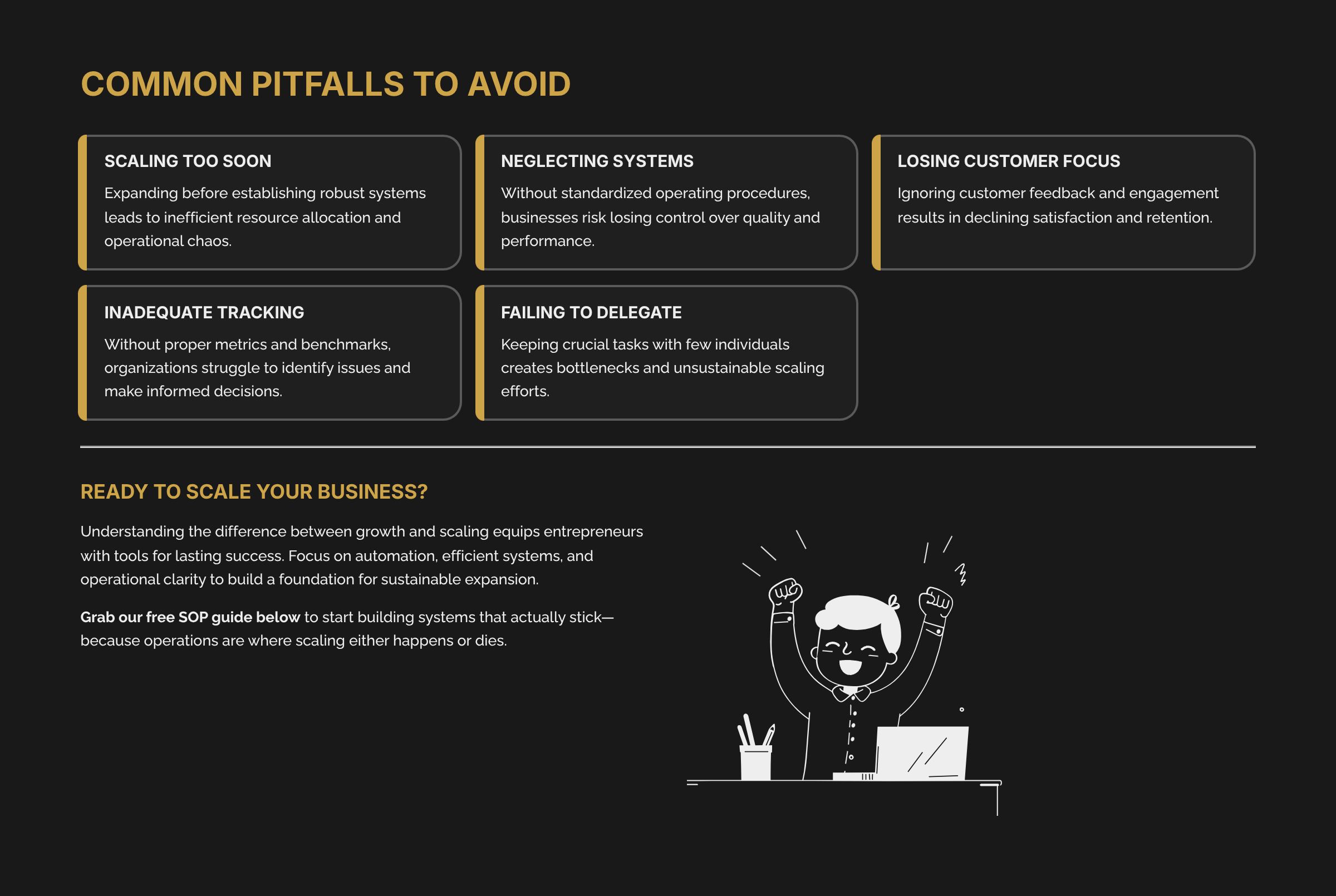
When organizations embark on a business scaling strategy, several pitfalls can hinder progress and negatively impact overall performance. One significant mistake is scaling too soon. If a business expands its operations before establishing robust systems and processes, it can lead to inefficient resource allocation and operational chaos.
Additionally, neglecting systems can be detrimental. A successful scaling process requires that organizations implement standardized operating procedures that facilitate consistency and efficiency. Without these systems, businesses risk losing control over quality and performance.
Another frequent challenge lies in losing focus on customer experience. In the pursuit of rapid growth, many companies overlook the importance of nurturing customer relationships. Ignoring customer feedback and engagement can result in a decline in satisfaction, ultimately affecting retention and brand reputation.
Moreover, inadequate performance tracking can prevent businesses from understanding the impact of their scaling efforts. Without proper metrics and benchmarks, organizations may struggle to identify issues and make informed decisions.
Finally, failing to delegate responsibilities can lead to bottlenecks, with crucial tasks remaining in the hands of a few individuals. Effective delegation is essential to empower teams and ensure that scaling efforts are sustainable. By being aware of these common pitfalls and taking proactive measures, organizations can create a more effective business scaling strategy that supports long-term success and growth.
Conclusion
In conclusion, distinguishing between business growth and business scaling is vital for any entrepreneur seeking sustained success. Business growth often entails increasing revenues or customer bases, which typically means a rise in operational costs and resource allocation. On the other hand, business scaling emphasizes efficiency and the ability to expand without the proportional increase in expenses. Entrepreneurs who understand these concepts can craft strategies that not only promote short-term success but also build a robust foundation for long-term sustainability.
And this is exactly why we created resources that help business owners systemize without overwhelm. One of the most powerful is a simple guide focused on SOPs and operational clarity, because operations are where scaling either happens or dies. You can grab that free resource below this post, and it walks you step by step through building systems that actually stick .
As outlined in the article, successful scaling hinges on the implementation of automation and the creation of efficient systems. These elements allow businesses to respond to increased demand without compromising their financial health or operational integrity. Thus, recognizing the importance of balancing growth with scaling ensures that companies can thrive in competitive environments.
Entrepreneurs are encouraged to leverage the knowledge gained from this differentiation to develop tailored strategies that align with their specific needs and market conditions. By focusing on scaling, businesses can better prepare themselves to handle future challenges, optimize resources, and enhance profitability. Ultimately, this understanding equips leaders with the tools necessary for making informed decisions that will foster lasting success in their respective industries. Implementing these insights will undoubtedly pave the way for thriving enterprises in today’s dynamic business landscape.
You don’t need another marketing agency making big promises. You need a partner who understands that sustainable business growth requires more than ads and content. It takes strategy, positioning, demand generation, sales enablement, automation, and customer retention—all working together in perfect sync.
6D FRAMEWORK
SERVICES
Subscribe to our newsletter
Get Smart, Actionable Growth Insights—Straight to Your Inbox. Proven strategies, expert tips, and real-world case studies to help you scale with clarity and control. No fluff. No spam. Just growth-focused insights you can actually use.