Introduction: Why Website Design Matters for Business Growth
Your website is often the first handshake between your business and potential customers—a digital introduction that shapes how people perceive your credibility, professionalism, and value within seconds. In today’s competitive marketplace, first impressions happen faster than ever, and a single glance at your homepage can determine whether a visitor stays to explore or leaves for a competitor.
According to industry research, 75% of users judge a company’s credibility purely based on its website design. That means no matter how great your product or service is, if your website looks outdated, cluttered, or difficult to navigate, people may never give your business a chance. On the other hand, a thoughtfully designed website can make even a small business feel established, trustworthy, and worth engaging with.
Website design isn’t just about looking good—it’s about working smart. A well-structured site guides visitors smoothly from curiosity to action. It communicates your brand story clearly, highlights your strengths, and helps users find what they need without effort. Behind every effective website lies a strategy—a blend of psychology, user experience, and brand identity working together to convert clicks into clients.
In this article, we’ll uncover six proven website design strategies that help businesses grow by improving visibility, building trust, and driving conversions. Whether you’re a local business owner, an entrepreneur, or part of a growing brand, these principles can transform your website from a digital brochure into a business growth engine.
Stay with us until the end, because we’ve prepared a free valuable gift—a downloadable Website Design Optimization Checklist that will help you instantly identify what’s working on your site and what’s quietly costing you leads. It’s your shortcut to turning design insights into measurable growth.
1. User-Centric Design: Focus on Experience, Not Just Aesthetics
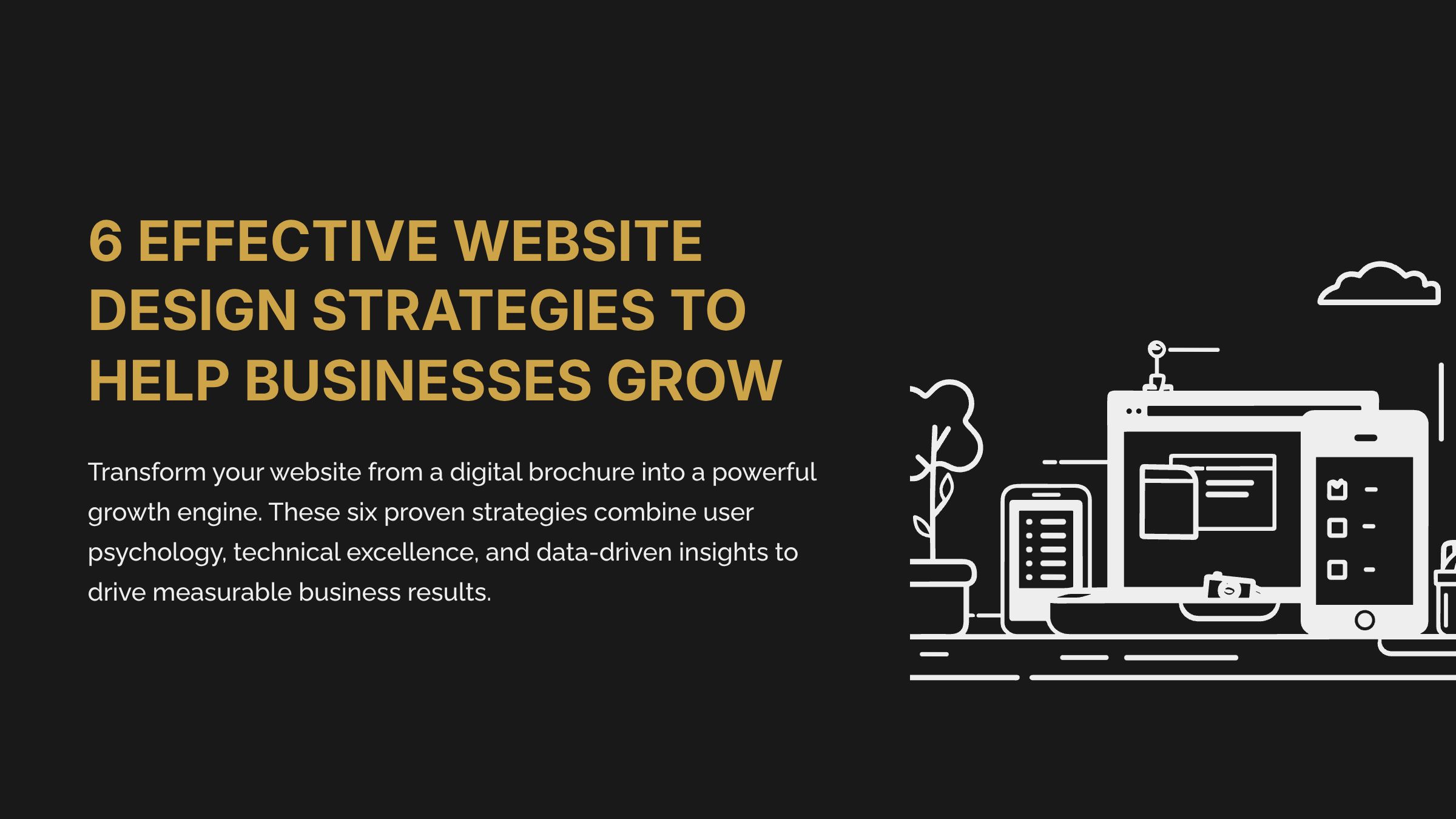
User-centric website design places the visitor’s needs, goals, and emotions at the center of every creative decision. Instead of focusing purely on how a site looks, this approach asks how easily people can find information, complete a task, or understand what the business offers. When a website feels natural to navigate—buttons where users expect them, content structured in logical order, and language that speaks to their intent—engagement rises and frustration disappears. Every extra click, confusing label, or broken link adds friction that can quietly push potential customers away.
A user-friendly website also reflects empathy. It considers how different visitors experience the interface—whether they’re browsing on a phone, using assistive technology, or scanning quickly for answers. Accessibility features like readable font sizes, alt text for images, and clear contrast ratios not only improve usability but also show respect for all users.
Designers can uncover valuable insights by observing real behavior rather than guessing. Heatmaps, scroll-tracking, and A/B testing reveal how people move through a site, where they hesitate, and what drives them to click or leave. These analytics guide practical adjustments: simplifying navigation menus, re-ordering service sections, or shortening forms to reduce drop-offs.
Ultimately, user-centric design builds trust and loyalty by making people feel understood. When visitors experience smooth, intuitive interactions, they associate that ease with the brand itself. Over time, this sense of effortlessness translates into higher conversions, repeat visits, and stronger word-of-mouth growth—proof that good website design begins with understanding human behavior.
2. Responsive & Mobile-First Design
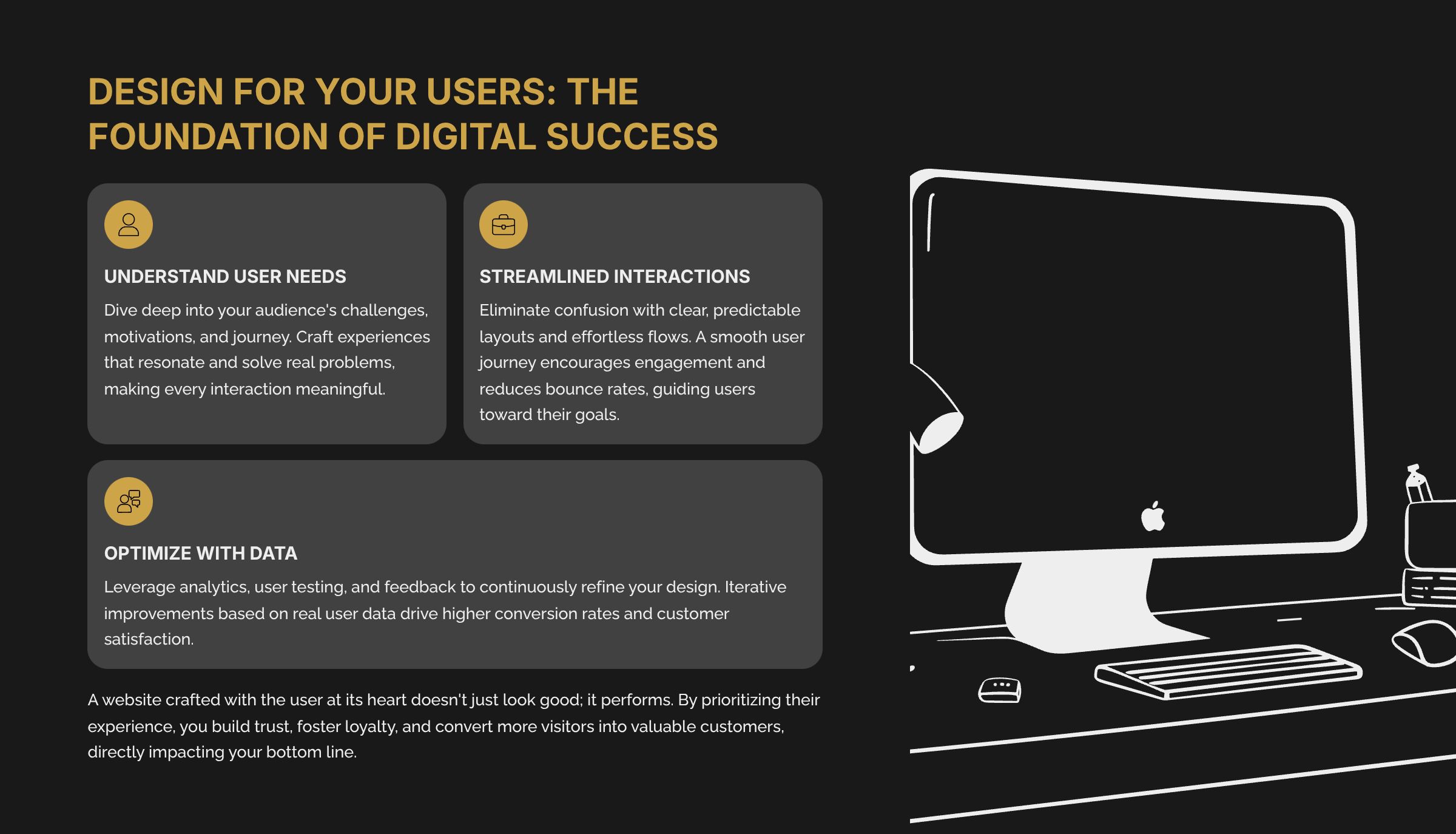
Responsive and mobile-first website design ensures that every visitor enjoys a seamless experience, regardless of the device they’re using. With more than half of global web traffic coming from mobile devices, businesses can no longer treat mobile optimization as optional. A responsive site automatically adjusts its layout, images, and content to fit different screen sizes, providing a consistent and enjoyable experience whether viewed on a desktop, tablet, or smartphone. This adaptability not only improves usability but also strengthens brand credibility, as users perceive mobile-friendly websites as more professional and reliable.
From a technical perspective, mobile-first design means creating the website layout for smaller screens first, then expanding features for larger displays. This approach forces clarity and simplicity—prioritizing essential content, easy navigation, and faster load times. Search engines like Google reward such optimization by ranking mobile-friendly websites higher in search results, directly influencing visibility and traffic.
Performance is also a critical part of responsive design. Heavy images, unnecessary animations, and complex scripts can slow down page loading, which leads to higher bounce rates. Compressing images, using adaptive media queries, and minimizing code help keep the experience smooth and efficient.
A well-executed mobile-first strategy does more than make a site look good on phones—it enhances engagement and conversion rates. When users can scroll, tap, and purchase effortlessly, they’re more likely to complete actions that matter to your business. In today’s digital landscape, responsiveness isn’t a design choice—it’s a growth requirement.
3. Visual Hierarchy and Conversion Pathways
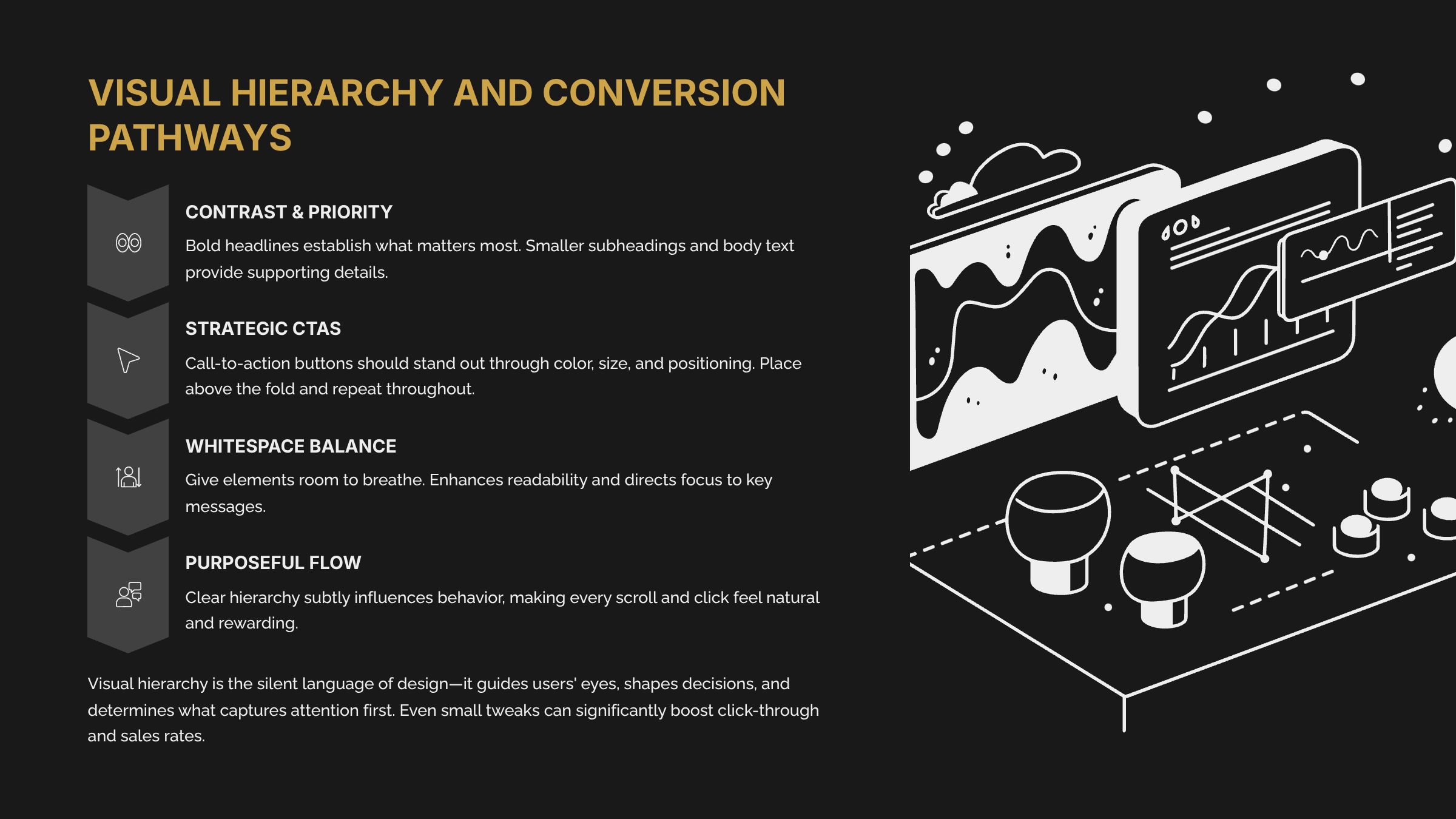
Visual hierarchy is the silent language of website design—it guides users’ eyes, shapes their decisions, and determines what captures attention first. Every color, font size, and placement sends a signal about what matters most. A strong hierarchy begins with contrast: bold headlines establish priority, while smaller subheadings and body text provide supporting details. When users can instantly identify where to look next, they feel in control and stay engaged longer.
Strategically placed call-to-action (CTA) buttons play a crucial role in this structure. Whether it’s “Book a Consultation,” “Download the Guide,” or “Add to Cart,” CTAs should stand out visually through color, size, and positioning. Placing them above the fold ensures immediate visibility, while repeating them throughout longer pages reinforces intent without overwhelming the visitor. The goal is to make action easy, natural, and aligned with user intent.
Whitespace, often underestimated, adds rhythm and balance to a layout. By giving elements room to breathe, it enhances readability and directs focus to key messages. Similarly, consistent typography builds familiarity, helping users navigate effortlessly through headlines, descriptions, and supporting visuals.
A clear visual hierarchy doesn’t just make a website look polished—it subtly influences behavior. When content flows logically, users instinctively follow the path toward conversion. Studies show that even small tweaks, like adjusting font weight or button placement, can significantly boost click-through and sales rates. Effective hierarchy turns design into persuasion, making every scroll and click feel purposeful and rewarding.
4. Speed, Performance, and Technical Optimization
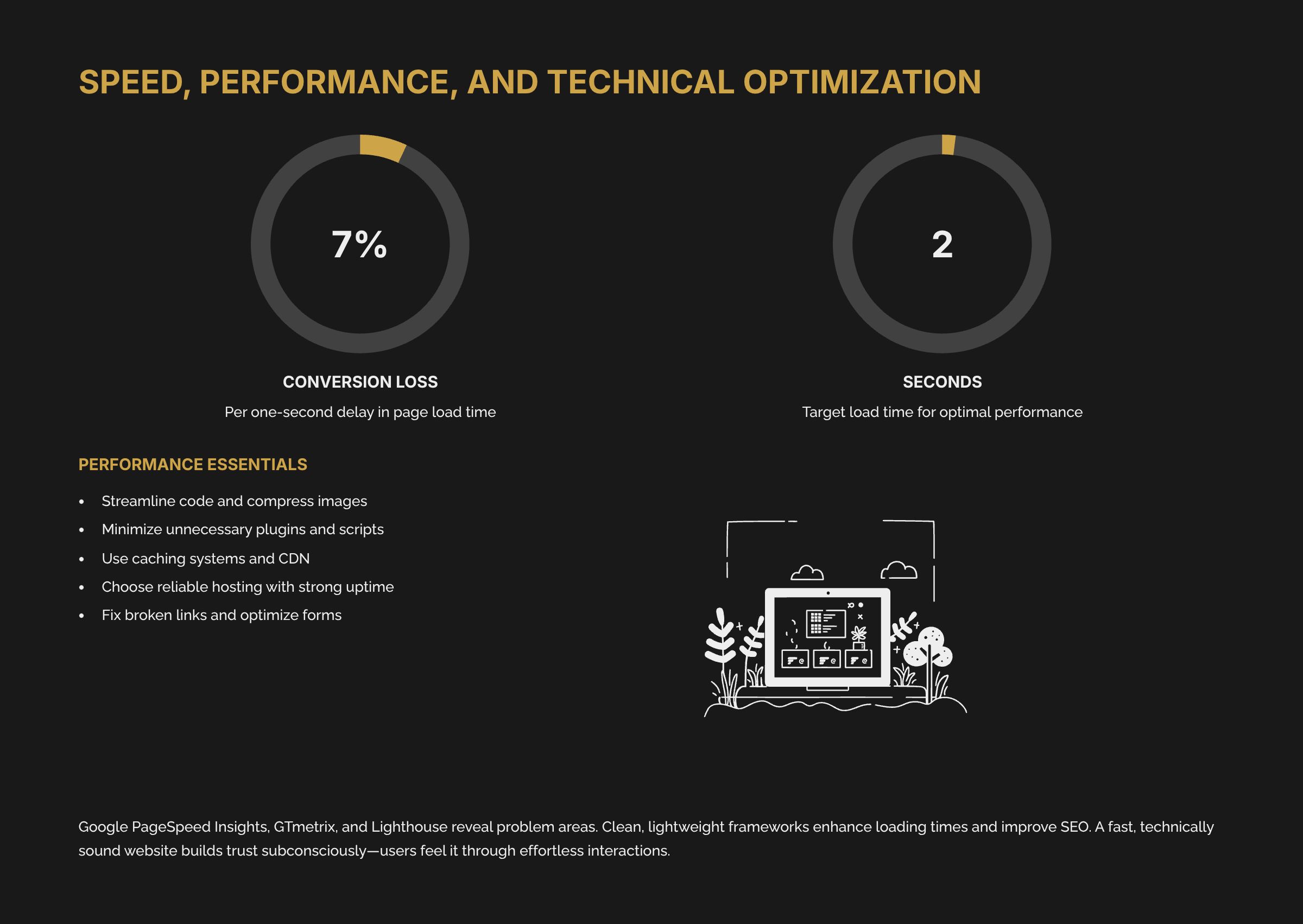
Website performance is one of the most overlooked yet influential aspects of design. A slow, poorly optimized website frustrates users, damages credibility, and directly impacts sales. Research shows that even a one-second delay in page load time can reduce conversions by up to 7%. In an era where attention spans are shorter than ever, speed isn’t optional—it’s a competitive advantage.
Optimizing performance starts with streamlining code, compressing images, and minimizing unnecessary plugins or scripts. Tools like Google PageSpeed Insights, GTmetrix, and Lighthouse can quickly reveal problem areas. Using caching systems and a Content Delivery Network (CDN) ensures that your website loads fast no matter where visitors are located. Clean, lightweight design frameworks not only enhance loading times but also improve SEO performance, since Google prioritizes fast and mobile-friendly sites in search rankings.
Technical optimization also extends to server quality and hosting. Cheap or shared hosting may save costs upfront but often slows response times and leads to downtime that erodes trust. Choosing a reliable host with strong uptime and SSL security helps protect both performance and user confidence.
Equally important is eliminating friction—fixing broken links, optimizing form submissions, and ensuring scripts run efficiently. When combined, these efforts make navigation smooth and reliable, reducing bounce rates and boosting engagement.
Ultimately, a fast, technically sound website builds trust subconsciously. Users might not consciously notice that it loads in under two seconds, but they will feel it—through effortless interactions that make your business appear modern, professional, and worth staying with.
5. Branding Consistency and Emotional Connection
Branding consistency in website design is what transforms a business from merely recognizable to truly memorable. Every color, font, image, and tone of voice communicates something about who the brand is and what it stands for. When these visual and emotional cues remain consistent across every page, visitors quickly form trust and familiarity—two key ingredients for conversion and loyalty. In contrast, inconsistent design elements, mismatched imagery, or fluctuating tones can confuse users and weaken credibility, even if the content itself is strong.
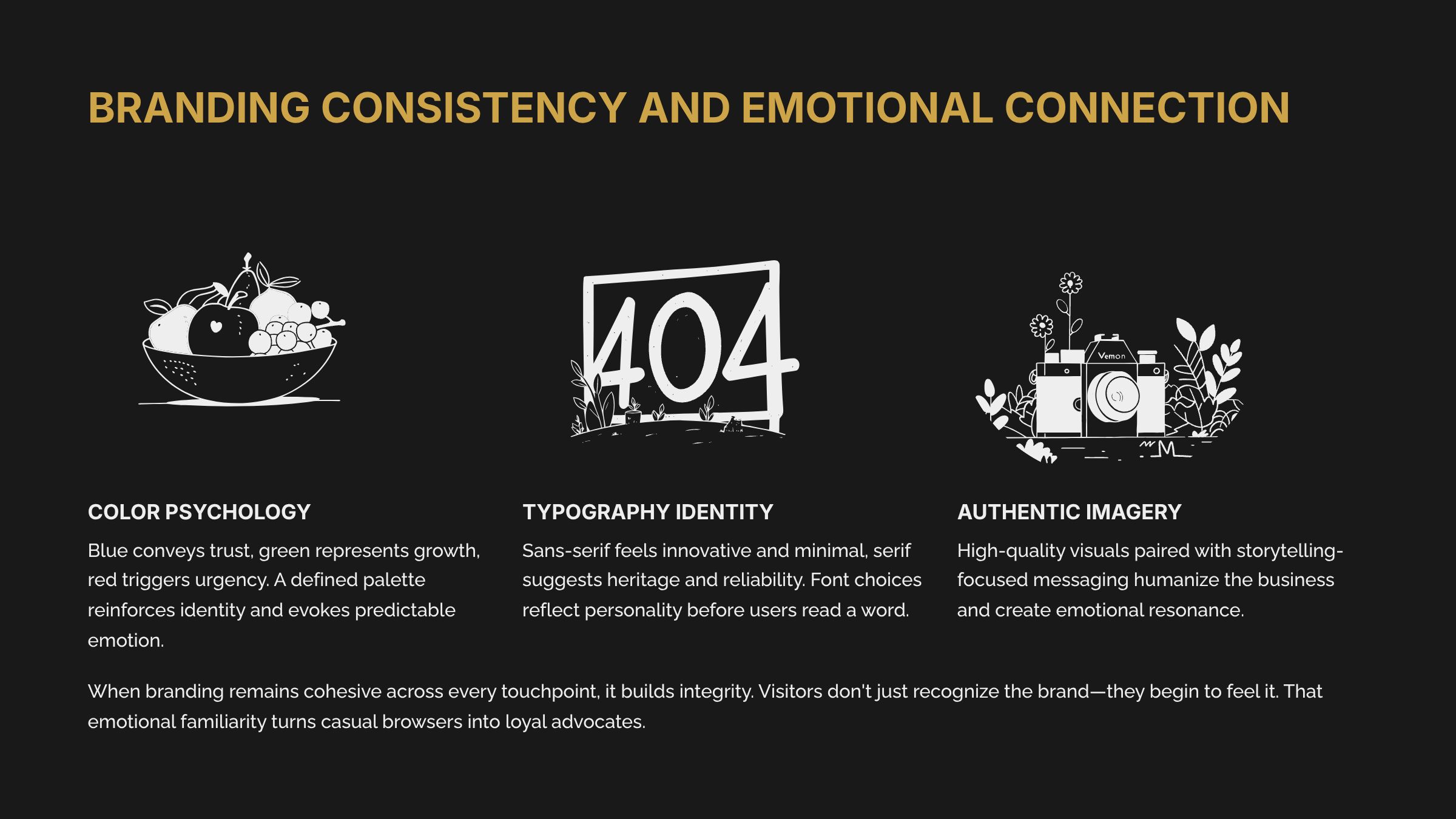
Color psychology plays a powerful role in shaping perception. Blue often conveys trust, green represents growth, and red triggers urgency or excitement. Using a defined color palette reinforces identity and evokes emotion in a predictable way. Typography supports this identity by reflecting personality—modern sans-serif fonts feel innovative and minimal, while serif fonts suggest heritage and reliability. These subtle design choices subconsciously align visitors with the brand’s values before they even read a word.
Imagery and copy complete the emotional connection. High-quality, authentic visuals paired with storytelling-focused messaging help humanize the business. For example, a wellness clinic might feature real patients and natural tones to communicate care and calm, while a tech company may choose sleek imagery and concise headlines to express innovation.
When branding remains cohesive across every touchpoint—from website to email signatures—it builds a sense of integrity. Visitors don’t just recognize the brand; they begin to feel it. That emotional familiarity turns casual browsers into loyal advocates.
6. Data-Driven Design and Continuous Improvement
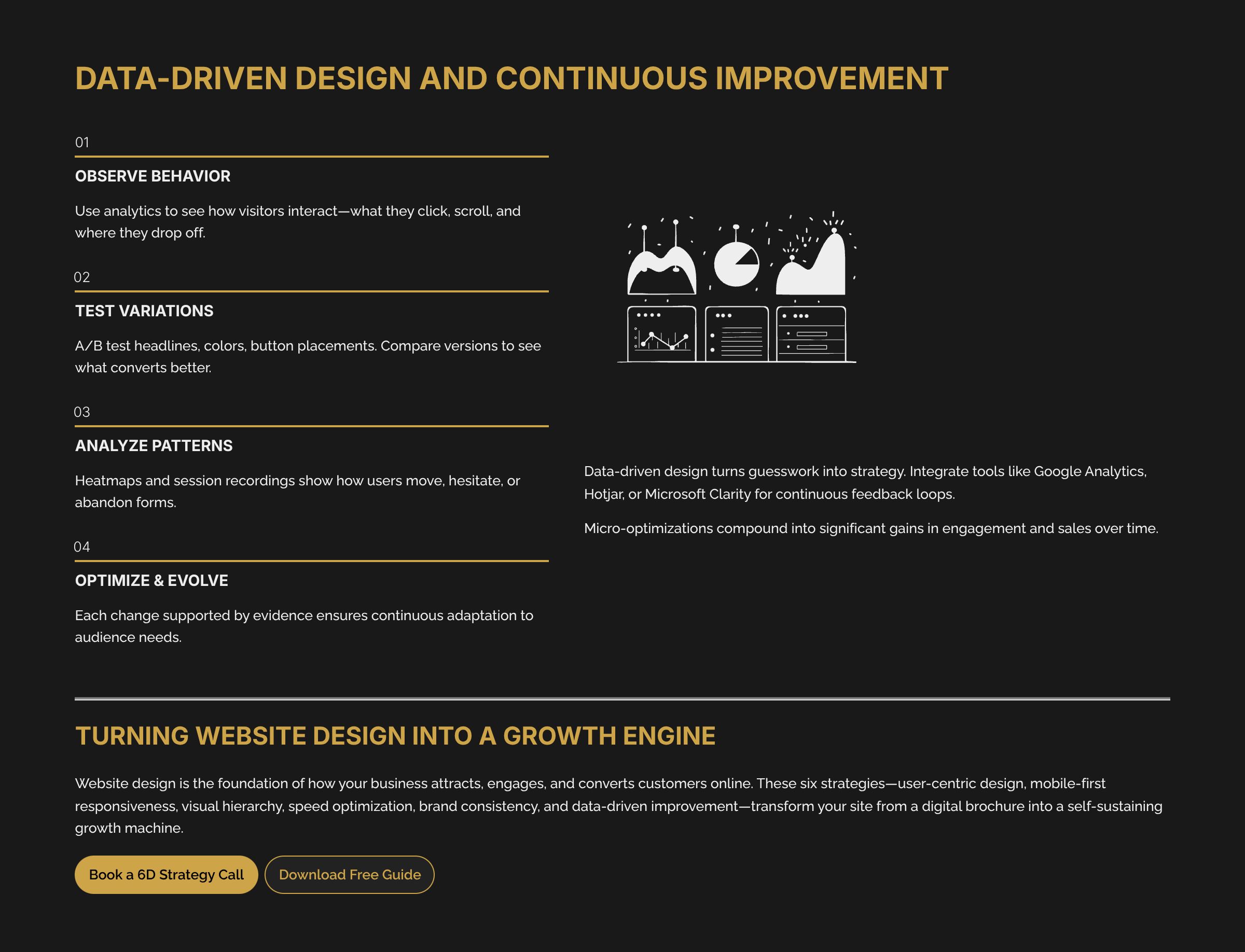
Data-driven website design turns guesswork into strategy by grounding every decision in measurable user behavior. Instead of relying solely on intuition, designers and marketers can use analytics tools to observe how visitors actually interact with the site—what they click, how far they scroll, and where they drop off. This insight reveals which elements attract attention and which create friction. By understanding these patterns, businesses can refine layouts, improve navigation, and position calls-to-action where they’re most effective.
A/B testing is one of the most practical tools in this process. By comparing two versions of a page—such as different headlines, colors, or button placements—teams can see which design converts better before rolling out changes across the site. Over time, these micro-optimizations compound into significant gains in engagement and sales. Heatmaps and session recordings go deeper, offering visual data that shows how users move through a page, hesitate, or abandon forms.
Beyond on-page behavior, performance analytics like bounce rate, session duration, and conversion paths help measure how well the site aligns with business goals. Integrating data from platforms such as Google Analytics, Hotjar, or Microsoft Clarity allows continuous feedback loops where design and strategy evolve together.
Data-driven design isn’t about endless tweaking—it’s about clarity. Each change is supported by evidence, ensuring the website continually adapts to audience needs and market shifts. When decisions are informed by real numbers, design becomes a living system that consistently drives measurable growth and long-term customer satisfaction.
Conclusion: Turning Website Design into a Growth Engine
Website design is far more than an aesthetic choice—it’s the foundation of how your business attracts, engages, and converts customers online. When executed strategically, it becomes a true growth engine. By now, you’ve seen how each of the six key strategies contributes to that transformation: user-centric design ensures visitors feel understood and supported, responsive and mobile-first layouts keep your brand accessible everywhere, and visual hierarchy guides attention toward actions that drive results. Add in speed and performance optimization, and you’ve removed the friction that causes people to leave too soon. Brand consistency then deepens trust and recognition, while data-driven design keeps your site evolving with real customer insights.
Together, these principles don’t just make a website look good—they make it work. Each click, scroll, and interaction becomes part of a system engineered to turn interest into action and browsers into buyers. Businesses that treat design as a revenue driver consistently outperform those that see it as a cosmetic upgrade. The truth is, design is not an expense—it’s an investment that pays ongoing dividends through higher conversions, stronger retention, and lasting brand authority.
Now, it’s time to put these ideas into motion. As promised, you can download your free “Business Websites Mastery – Book” at the bottom of this post. It’s packed with actionable checklists, examples, and exercises to help you refine your website step by step.
And if you’re ready to stop wasting money on ads that don’t convert and instead build a complete system that does—book a 6D Strategy Call today. We’ll help you turn your website into a self-sustaining growth machine that attracts quality clients, automates conversions, and scales with your business vision. The next level of your digital presence starts now.
Download Business Websites Mastery Book