
Introduction
Understanding buyer psychology is essential for businesses aiming to craft offers that resonate with their target audience. The underlying emotions, pain points, and desires of consumers significantly influence their purchasing behaviors. By gaining insight into what drives these decisions, marketers can design compelling offers that not only attract attention but also prompt action. For instance, recognizing emotional triggers like the fear of missing out or the need for security allows businesses to tailor their messaging effectively, transforming an ordinary product offer into a powerful incentive that captivates potential buyers.
Furthermore, addressing common customer pain points can enhance the relevance of an offer, leading to increased conversion rates. When brands communicate how their products or services alleviate specific challenges faced by consumers, they create a stronger connection and build trust. This understanding of both desires and difficulties fosters a proactive approach to marketing, positioning offers in a way that inspires confidence and encourages immediate action.
In conclusion, a thorough understanding of buyer psychology lays the groundwork for creating offers that not only sell but also forge lasting relationships with customers. Marketers and entrepreneurs must invest time in exploring the intricacies of their audience’s mindset, as this knowledge will drive the development of targeted offers that resonate deeply, ultimately leading to increased sales and a sustainable competitive edge in the marketplace.
Stick with me for just a few more minutes — because if you want more than a one-off “offer that sells,” I’m about to share something you’ll definitely want. Right at the end of this article you’ll be able to grab The Complete Offer Testing Playbook — a free download I’ve created to help you systematically test and refine your offers so that they truly convert, in any market.
Keep reading… and when you’re ready to go from “good” offers to offers that consistently sell, you’ll have everything you need.
Understanding Buyer Psychology: The Foundation of Offers That Sell
Buyer psychology plays a pivotal role in shaping offers that effectively resonate with customers. Emotions, pain points, and desires are the driving forces behind purchasing decisions, and understanding these elements is crucial for creating compelling offers. When buyers encounter an offer that addresses their specific needs or alleviates their concerns, they are more likely to convert. For instance, identifying emotional triggers, such as fear of missing out or the desire for security, can transform a standard product pitch into a persuasive incentive.
Moreover, addressing customer pain points—common challenges or inconveniences faced by potential buyers—can significantly enhance the relevance of an offer. When businesses tailor their messaging to highlight how their products or services provide solutions to these issues, they increase the offer’s appeal. This focus on understanding both desires and difficulties not only fosters trust but also encourages action from potential customers.
In essence, a solid grasp of buyer psychology establishes a foundation for creating offers that sell. It is essential for marketers and entrepreneurs to delve deeply into their audience’s mindset, as this insight will guide the development of targeted offers that truly connect, inspire confidence, and drive sales. By aligning offers with genuine customer motivation, businesses can ultimately achieve greater success and maintain a competitive advantage in their respective markets.
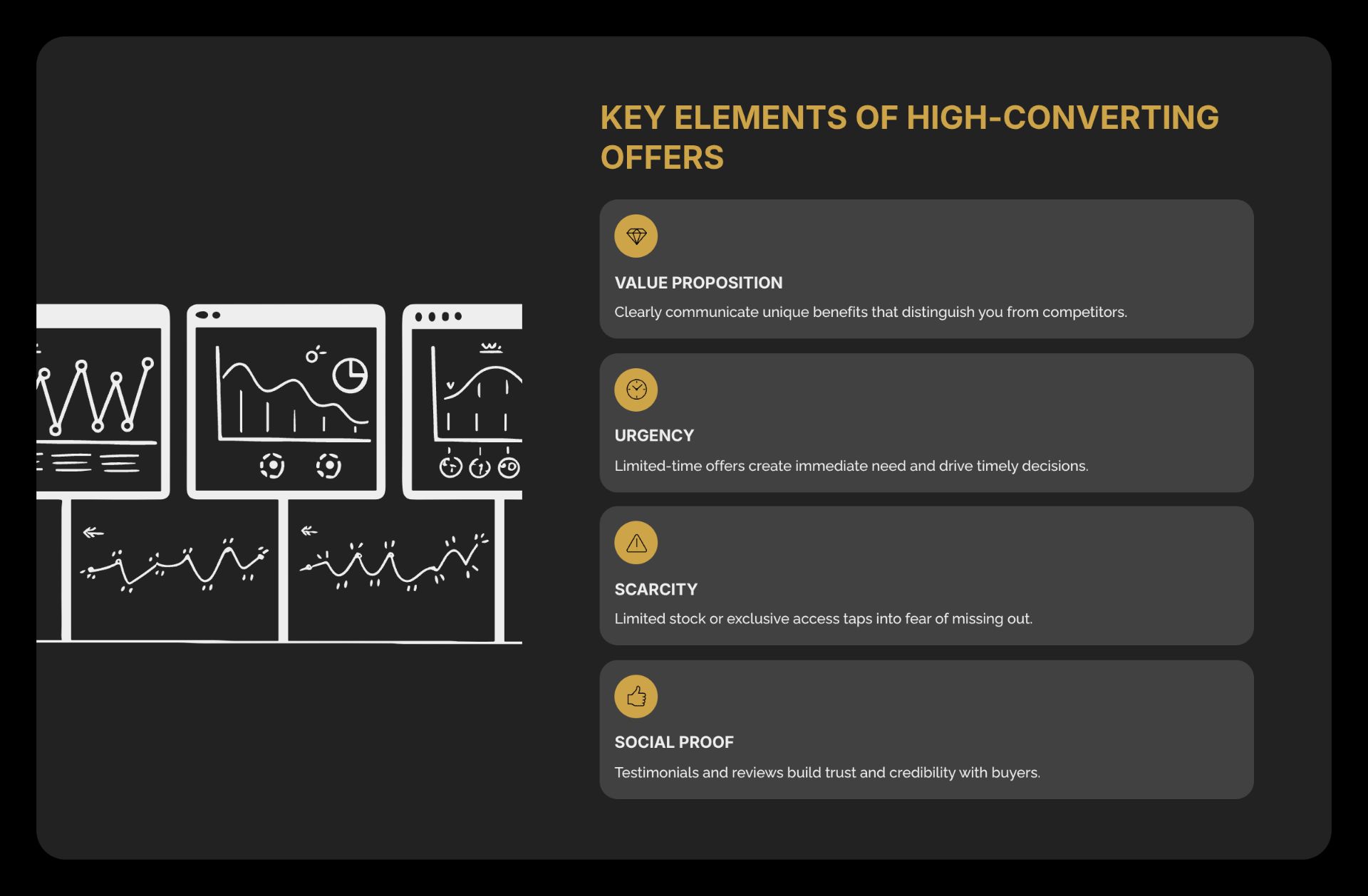
Key Elements of High-Converting Offers
In the competitive landscape of digital marketing, crafting high-converting offers requires a deep understanding of several key components. First and foremost, the value proposition stands as the backbone of any compelling offer. It clearly communicates the unique benefits and advantages that the product or service delivers, distinguishing it from competitors.
Next, urgency plays a crucial role in motivating potential customers to act quickly. Limited-time offers or special promotions create a sense of immediate need that can drive timely decisions and conversions. Similarly, incorporating scarcity—such as limited stock or exclusive access—taps into the fear of missing out, encouraging faster purchasing behavior.
Social proof is another essential element that can enhance the attractiveness of an offer. By showcasing testimonials, user reviews, or case studies, businesses can build trust and credibility, helping potential buyers feel more secure in their decision-making.
When these elements are expertly combined, the resulting offer resonates with the target audience, tapping into their desires and pain points. It is vital for marketers to continually evaluate and refine these components to adapt to shifting consumer preferences. Ultimately, understanding and implementing these core elements—value proposition, urgency, scarcity, and social proof—can significantly increase the likelihood of a successful conversion, providing a clear pathway to improved sales outcomes.
How to Write Offers That Sell Using Clear, Persuasive Language
Crafting offers that sell requires a mastery of clear and persuasive language tailored to the target audience. Effective communication begins with a deep understanding of customer needs, desires, and pain points. By using straightforward language, marketers can create compelling narratives that resonate with potential buyers.
One key technique is addressing the audience directly, using “you” to make the message personal. This approach not only establishes a connection but also encourages engagement. Additionally, utilizing vivid descriptions can evoke emotions and help buyers visualize the benefits of an offer. A focus on benefits rather than features can further enhance persuasion. For instance, instead of stating “Our software has advanced security features,” a better approach would be “Experience peace of mind with our state-of-the-art security that protects your data.”
Incorporating persuasive triggers such as urgency and exclusivity can also drive action. Phrases like “limited-time offer” or “exclusive deal for the first 100 customers” create a sense of urgency, motivating potential customers to act quickly. Through this combinatory approach of clarity and emotional appeal, offers can be crafted to not only inform but also inspire action.
In summary, writing offers that sell hinges on clear, relatable messaging that speaks directly to customer aspirations and needs. By adopting these strategies, marketers can significantly enhance the effectiveness of their sales offers in an increasingly competitive landscape.
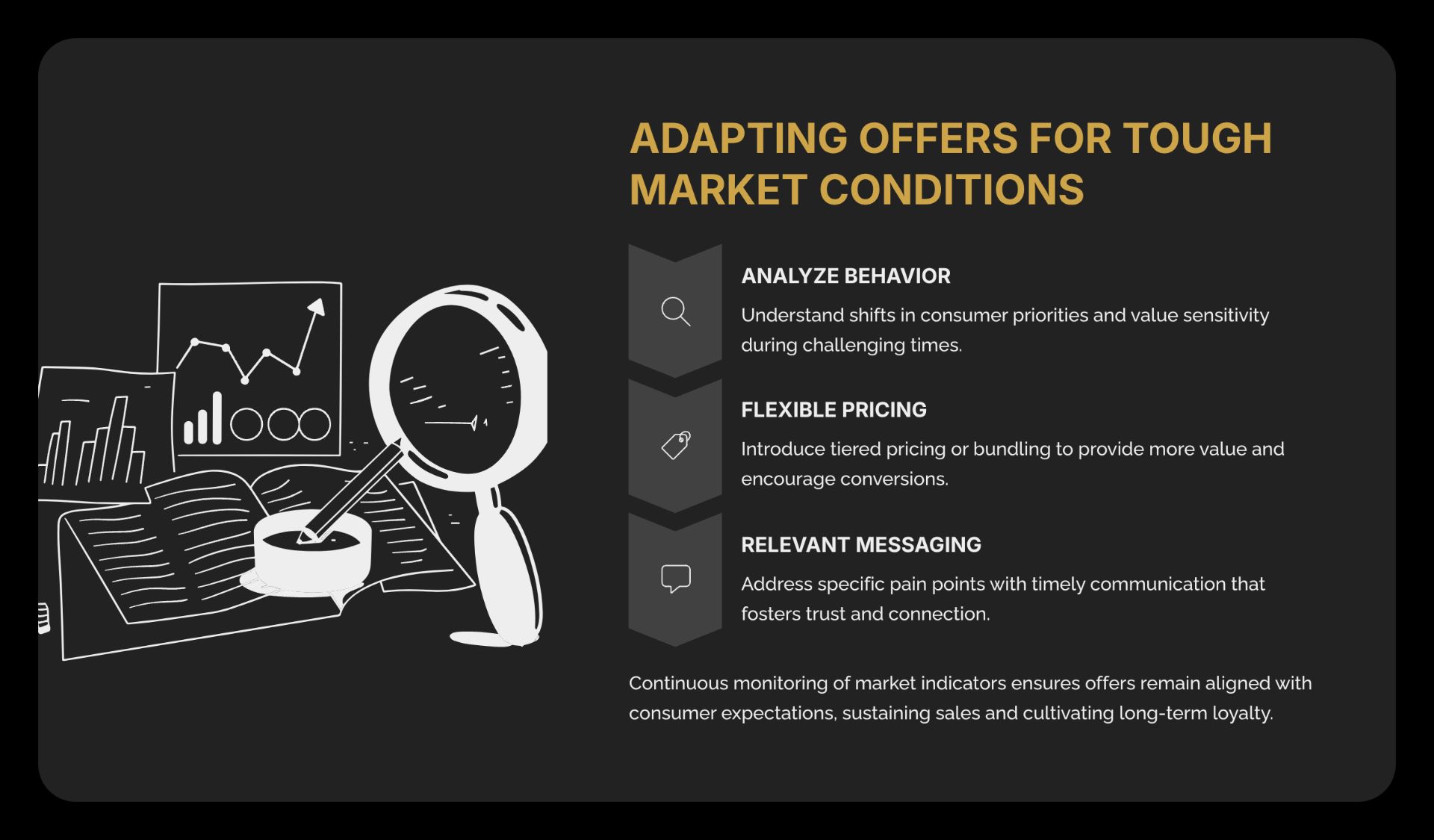
Adapting Offers for Tough Market Conditions
In a fluctuating economic landscape, businesses must adapt their sales strategies to meet the evolving needs of consumers. Understanding buyer behavior during challenging market conditions is crucial for maintaining sales momentum. Companies are encouraged to analyze shifts in consumer priorities and preferences, which may include heightened value sensitivity or a focus on essential products and services.
Implementing flexible pricing strategies can also enhance offer effectiveness during tough times. Businesses might consider introducing tiered pricing or bundling products to provide consumers with more value, thereby encouraging conversions. Moreover, incorporating timely and relevant messaging can help to address specific pain points that consumers may face, fostering a connection and reinforcing trust.
Furthermore, offers should be tailored to reflect current market realities, whether through adjusted discount structures or enhanced value propositions. Utilizing social proof, such as testimonials or case studies relevant to the current circumstances, can also enhance credibility.
Ultimately, by focusing on these strategies, organizations can ensure their offers remain relevant and appealing. Continuous monitoring of market indicators and buyer behavior is essential for quick adjustments that keep offers aligned with consumer expectations. Adapting offers for tough market conditions not only helps to sustain sales but can also cultivate long-term customer loyalty by demonstrating a company’s commitment to meeting consumer needs during uncertain times.
Using Data and Feedback to Optimize Your Offers
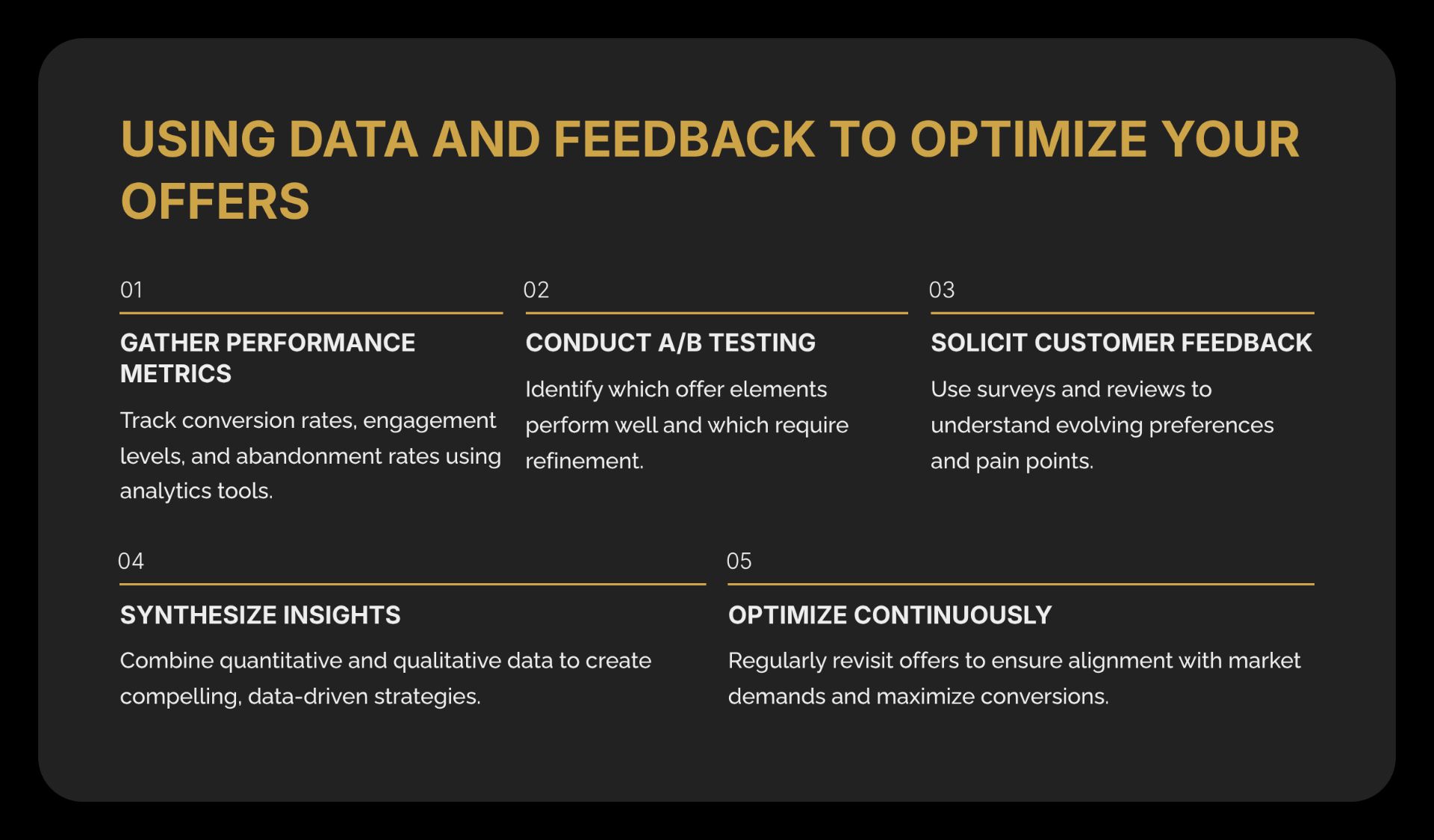
Gathering and analyzing data is crucial for enhancing the effectiveness of sales offers. Businesses can harness performance metrics, such as conversion rates, customer engagement levels, and abandonment rates, to inform adjustments that resonate with their target audience. Utilizing tools like Google Analytics and A/B testing provides actionable insights, allowing companies to identify which elements of an offer are performing well and which require refinement.
Additionally, soliciting direct feedback from customers through surveys or reviews helps in understanding their evolving preferences and pain points. This qualitative data can reveal critical information about what potential customers value most in an offer. By synthesizing both quantitative and qualitative findings, businesses can create compelling, data-driven strategies that enhance offer relevance and appeal.
Regularly revisiting and optimizing offers ensures alignment with market demands. For instance, companies may discover that incorporating social proof or adjusting pricing strategies significantly boosts interest and engagement. As consumer behavior continues to shift, adapting offers based on solid data not only maximizes conversion potential but also fosters customer loyalty by demonstrating responsiveness to their needs. Ultimately, this ongoing optimization process positions businesses to thrive amid competitive pressures while creating offers that genuinely resonate with their audience.
Real-World Examples of Offers That Sold in Competitive Markets
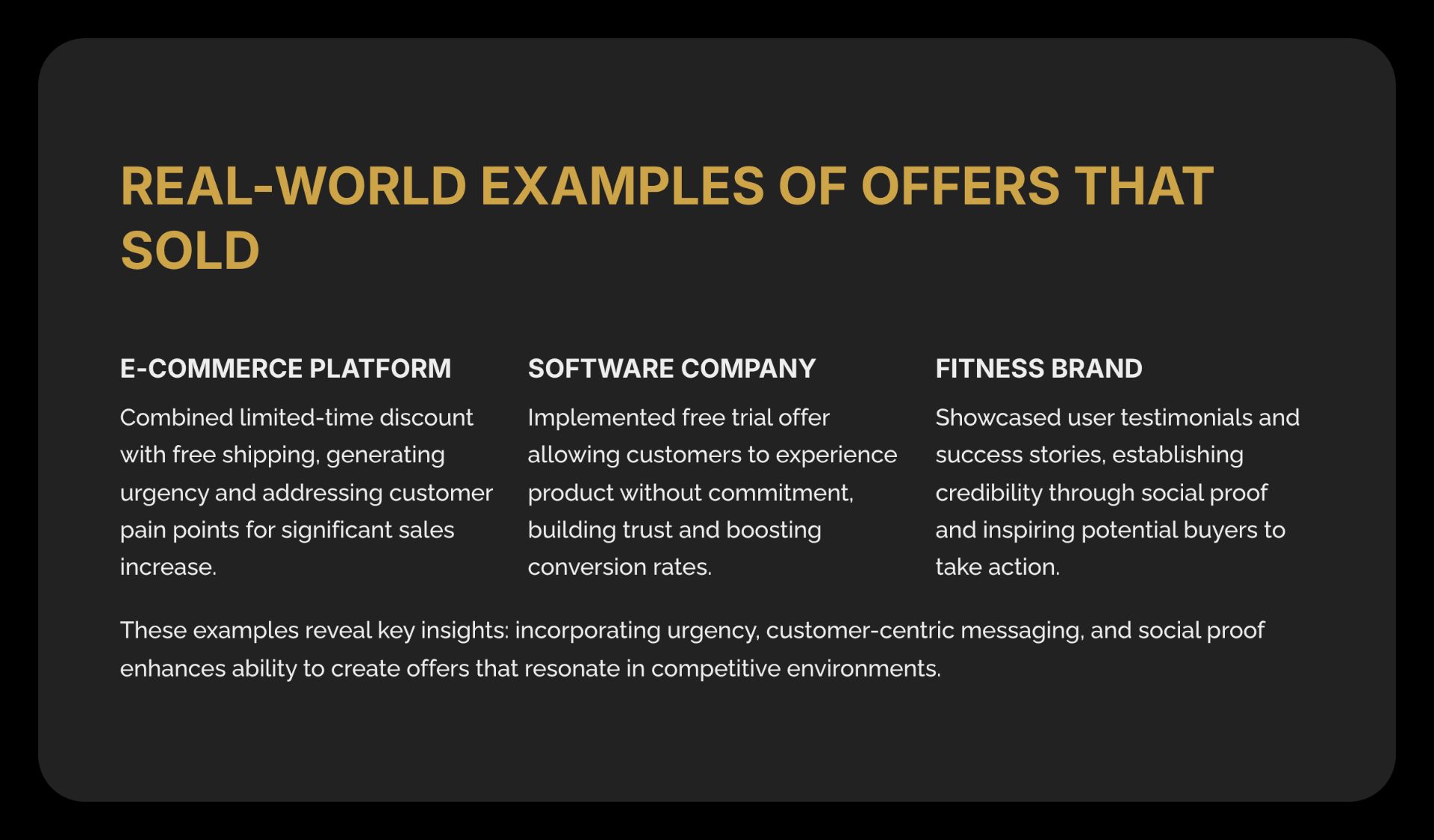
In the realm of marketing, real-world examples serve as invaluable learning tools. Numerous brands have successfully navigated competitive markets with strategically designed offers that capture attention and drive conversions. For instance, during a particular promotional campaign, a well-known e-commerce platform utilized a limited-time discount combined with free shipping. This approach not only generated urgency but also addressed common customer pain points, leading to a significant increase in sales.
Another noteworthy example is a software company that implemented a free trial offer, which allowed potential customers to experience the product without any financial commitment. This strategy effectively built trust and showcased the product’s value, resulting in a higher conversion rate from trial users to long-term subscribers.
Additionally, the use of social proof has proven effective in several contexts. A popular fitness brand showcased user testimonials and success stories, establishing credibility and inspiring potential buyers to take action. This tactic aligns with understanding buyer psychology and their need for validation through others’ experiences.
Analyzing these successful offers reveals key insights into market dynamics. By incorporating elements like urgency, customer-centric messaging, and social proof into their strategies, businesses can enhance their ability to create offers that resonate in competitive environments. By learning from these examples, marketers can adapt and refine their own approaches, ensuring they stay relevant and compelling in an ever-evolving marketplace.

Conclusion
In conclusion, a profound understanding of buyer psychology is instrumental in crafting offers that genuinely resonate with potential customers. By tapping into emotional triggers and recognizing common pain points, marketers can develop compelling propositions that go beyond mere transactions. The key lies in aligning offers with the authentic motivations of the audience, fostering trust and encouraging decisive action.
To achieve this, businesses must prioritize thorough research and analysis of their target demographics. By doing so, they can unveil underlying desires and challenges, which enable them to create solutions that speak directly to the needs of their customers. This focused approach not only enhances the relevance of offers but also cultivates a stronger emotional connection between the brand and its audience.
Furthermore, leveraging buyer psychology can provide a significant competitive edge in crowded markets. Companies that effectively integrate these insights into their marketing strategies are better positioned to inspire confidence and drive sales. As highlighted throughout this article, the foundation of successful offers lies in understanding the intricate nuances of buyer behavior. By prioritizing this understanding, businesses can transform their marketing efforts into more meaningful and effective interactions, ultimately leading to sustained growth and success in the marketplace.
If you’re serious about testing and optimizing your offers (instead of hoping they’ll work), download your copy of The Complete Offer Testing Playbook — designed especially for service-based businesses, real-estate firms, and any market where you want to turn prospects into paying clients.
Download The Complete Offer Testing Playbook