Marketing Automation: Your Key to Predictable Client Growth
December 3, 2025
Introduction
Marketing automation is transforming the landscape of digital marketing, providing businesses with the tools necessary to enhance efficiency and productivity. By leveraging advanced software platforms, businesses can automate a wide range of marketing tasks—ranging from email campaigns to social media management and lead tracking—thus addressing the repetitive nature of these activities. This innovation not only simplifies workflow but also creates opportunities for firms to engage with potential customers more effectively.
The importance of marketing automation cannot be overstated. Organizations that adopt these technologies can optimize their marketing strategies, allowing for real-time interaction with prospects and clients without the constant burden of manual efforts. This not only saves valuable time but also fosters stronger relationships with customers through timely and personalized communication.
Furthermore, marketing automation platforms offer powerful analytics capabilities, enabling businesses to glean insights into user behavior and preferences. This data-driven approach empowers organizations to deliver tailored content that aligns with the unique needs of their audience, significantly improving conversion rates and customer satisfaction.
In this article, readers will explore the multifaceted advantages of marketing automation, its impact on business growth, and how organizations can implement it effectively to stay competitive in an ever-evolving marketplace. Understanding these elements is vital for any business aiming to harness the full potential of their marketing endeavors.
Stick with me until the end because I’ve got a special free resource for you that will make everything we talk about today way easier. It’s called Automation in Small Businesses and if you’ve ever wished you had more time, more clarity, and more predictable results, you’re going to want to grab it.
What Is Marketing Automation and Why It Matters
Marketing automation refers to the use of software platforms and technologies to automate repetitive marketing tasks and workflows. This process encompasses various functions including email marketing, social media posting, lead generation, and customer relationship management. By integrating marketing automation, businesses can streamline client acquisition and retention processes, enhancing overall operational efficiency.
The significance of marketing automation lies in its ability to save time and resources while optimizing marketing efforts. For instance, automated email campaigns allow for timely communication with prospects and customers without the constant need for manual intervention. This fosters consistent engagement, leading to improved customer relationships and higher retention rates.
Moreover, marketing automation tools can analyze user behavior and preferences, enabling businesses to deliver targeted content that resonates with their audience. This personalized approach not only enhances the customer experience but also significantly boosts conversion rates, making it a crucial component for businesses looking to grow in a competitive market.
In summary, marketing automation serves as a foundational element for modern marketing strategies, allowing organizations to effectively manage and nurture leads while maintaining a focus on scalability and sustained growth. Understanding its role and benefits can empower businesses to leverage technology for better marketing outcomes.
Key Benefits of Marketing Automation for Business Growth
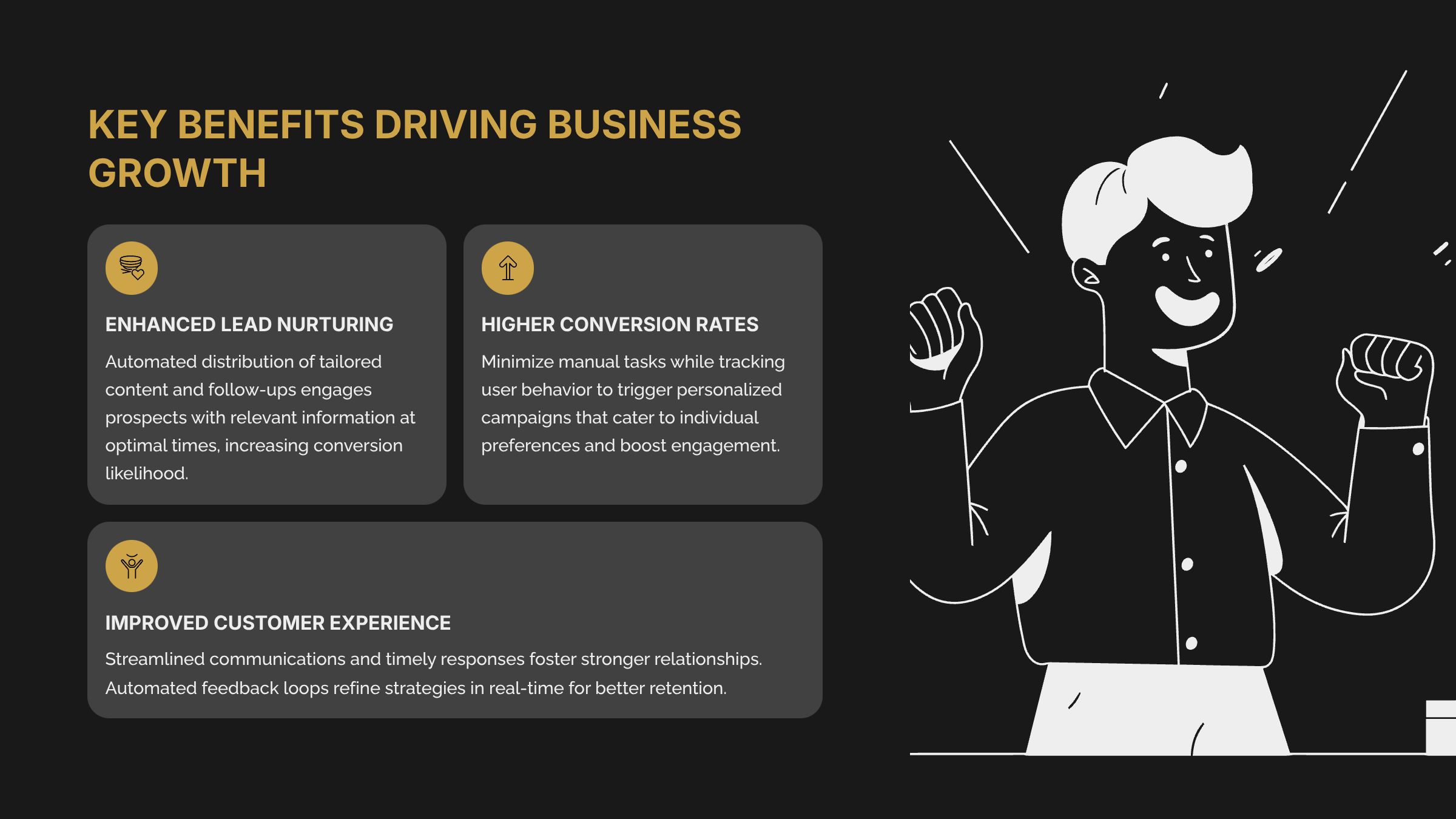
Marketing automation offers significant advantages for businesses aiming to enhance their growth strategies. One of its primary benefits is the improvement of lead nurturing processes. By automating the distribution of tailored content and follow-up messages, companies can engage prospects with relevant information at the right time, thereby increasing the likelihood of conversion.
Additionally, marketing automation enhances conversion rates by minimizing manual tasks, allowing teams to focus on strategic initiatives. Automated systems can track user behavior and trigger personalized campaigns, which cater to individual customer preferences. This level of customization not only increases engagement but also contributes to higher customer satisfaction.
Furthermore, the overall customer experience is markedly improved through automation. By streamlining communications and ensuring timely responses, businesses can foster stronger relationships with their audiences. Automated feedback loops enable companies to gather insights on customer interactions, refining their strategies in real-time for better retention.
In summary, employing marketing automation empowers businesses to efficiently nurture leads, boost conversion rates, and enrich customer experiences—critical elements in driving business growth. As firms integrate these automated processes, they position themselves to not only meet but exceed the expectations of their clientele, paving the way for sustainable success in a competitive market.
Top Marketing Automation Tools for Scalable Success
In the realm of marketing automation, selecting the right tools is essential for businesses aiming for scalable success. Several prominent platforms cater to diverse needs, making it crucial for organizations to assess their specific requirements before making a choice.
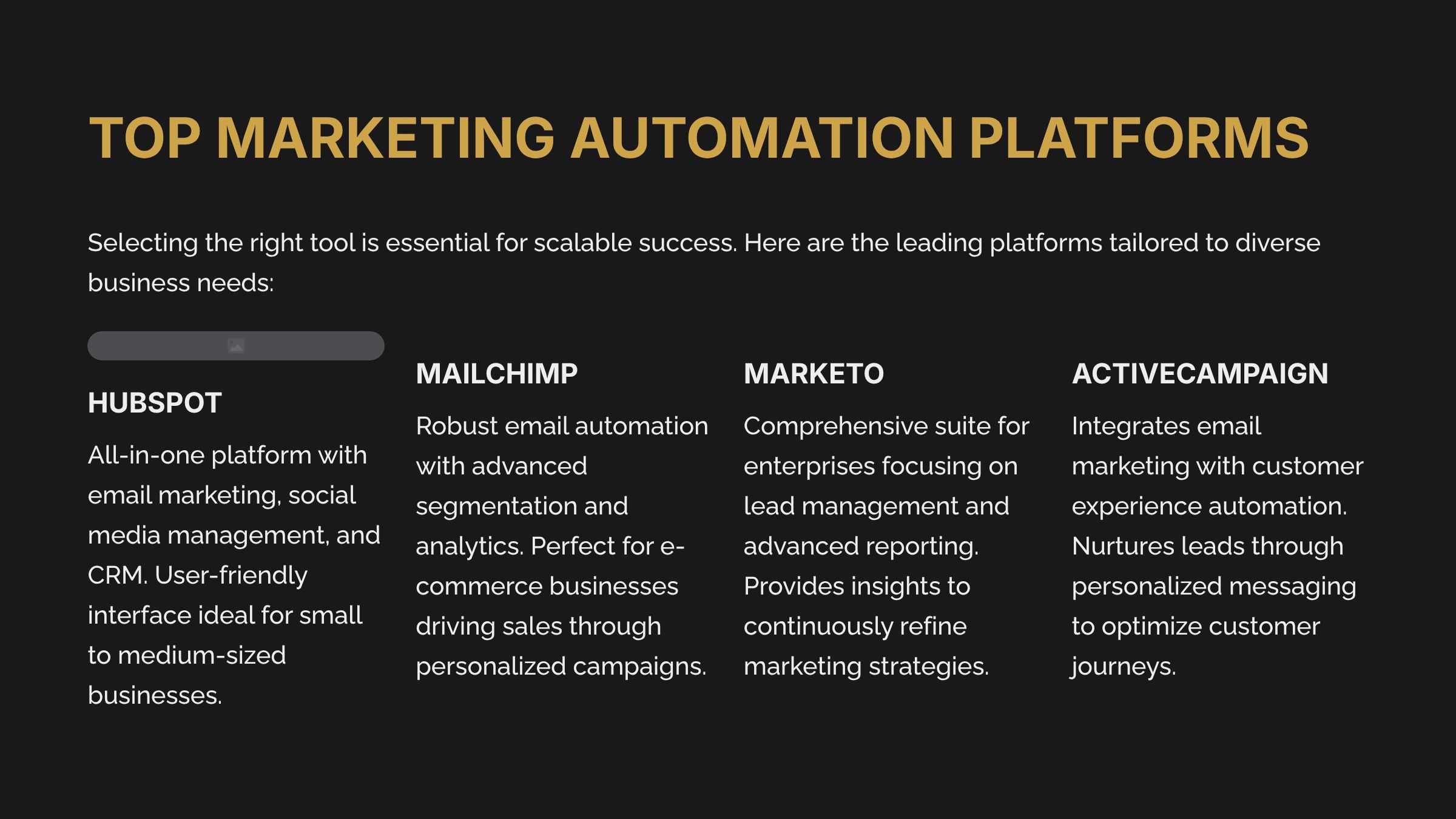
Popular marketing automation solutions include HubSpot, which offers an all-in-one platform featuring tools for email marketing, social media management, and customer relationship management (CRM). Its user-friendly interface makes it an excellent option for small to medium-sized businesses looking to streamline operations.
Another notable tool is Mailchimp, known for its robust email automation capabilities. Businesses benefit from advanced segmentation and analytics, allowing for targeted campaigns that enhance customer engagement. This tool is particularly effective for e-commerce businesses aiming to boost sales through personalized marketing efforts.
For larger enterprises, Marketo stands out with its comprehensive suite that focuses on lead management and advanced reporting features. Marketo equips organizations with the insights needed to refine their marketing strategies continuously.
Lastly, ActiveCampaign integrates email marketing with customer experience automation, focusing on nurturing leads through personalized messaging. Its automation capabilities ensure that businesses can optimize their customer journeys, ultimately driving higher conversion rates.
Selecting the ideal marketing automation tool depends on various factors, including budget, business size, and specific marketing goals. By evaluating these essential platforms against organizational needs, businesses can leverage automation to achieve sustainable growth and enhance marketing effectiveness.
Building Effective Marketing Automation Workflows
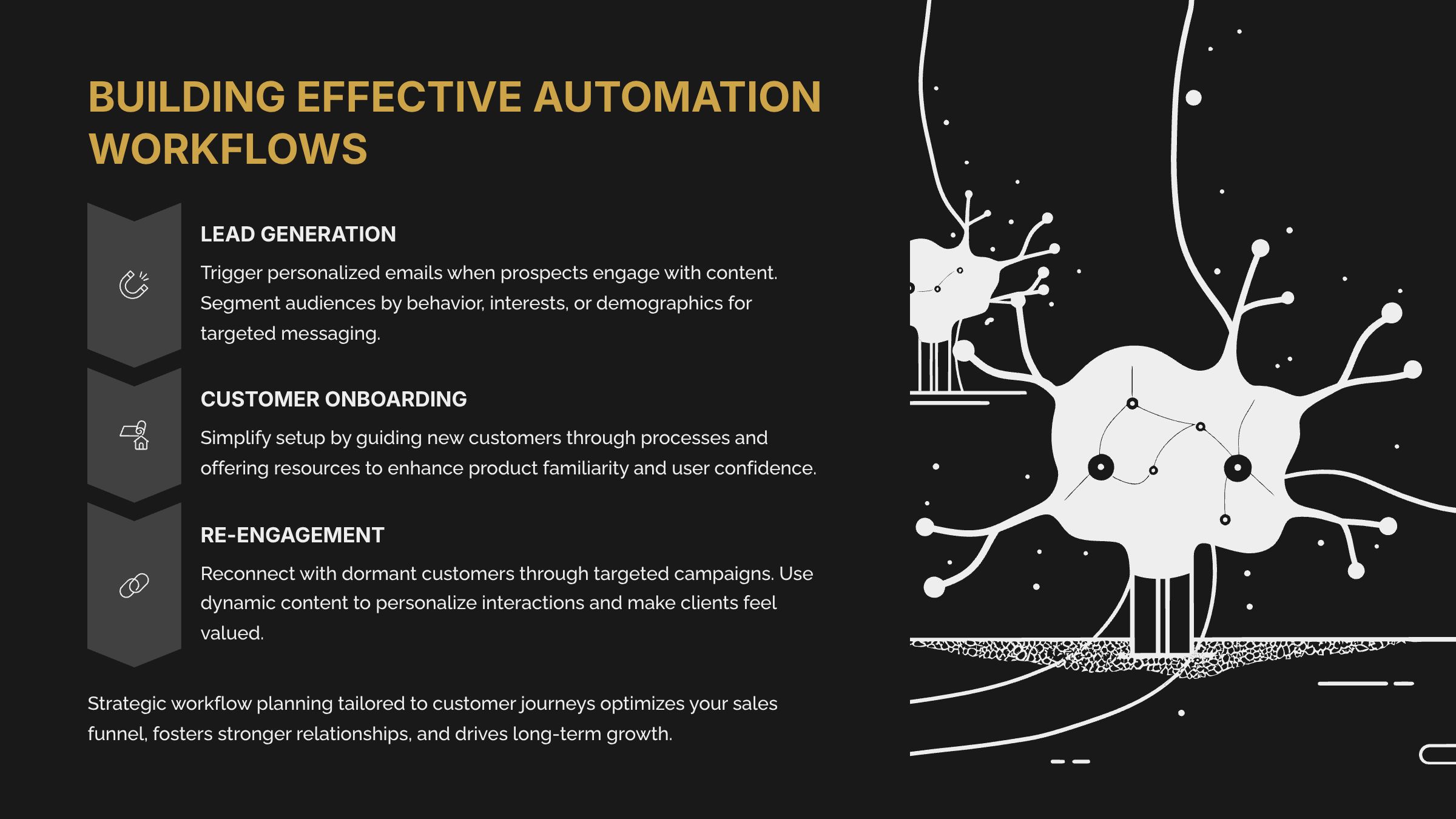
Creating effective marketing automation workflows is essential for businesses aiming to enhance lead generation, streamline onboarding, and facilitate customer re-engagement. To design these workflows, marketers should first identify key customer touchpoints throughout their journey.
In lead generation, automation can trigger personalized emails when potential clients engage with content. Celebrated tools enable businesses to segment audiences based on behavior, interests, or demographics, ensuring that the right message reaches the right audience at the right time. For onboarding, automation can simplify the process by guiding new customers through setup and offering resources to enhance user familiarity with products or services.
Re-engagement workflows are equally important; they allow businesses to reconnect with dormant customers through targeted campaigns that remind them of valuable offerings. Utilizing dynamic content can further personalize these interactions, making previously disengaged clients feel valued.
In conclusion, designing automated workflows not only saves time but can significantly boost engagement and satisfaction. By strategically planning sequences tailored to various customer journeys, businesses can optimize their sales funnel and foster stronger relationships. Through mindful implementation of marketing automation, companies can improve efficiency and drive long-term growth.
Best Practices for Implementing Marketing Automation
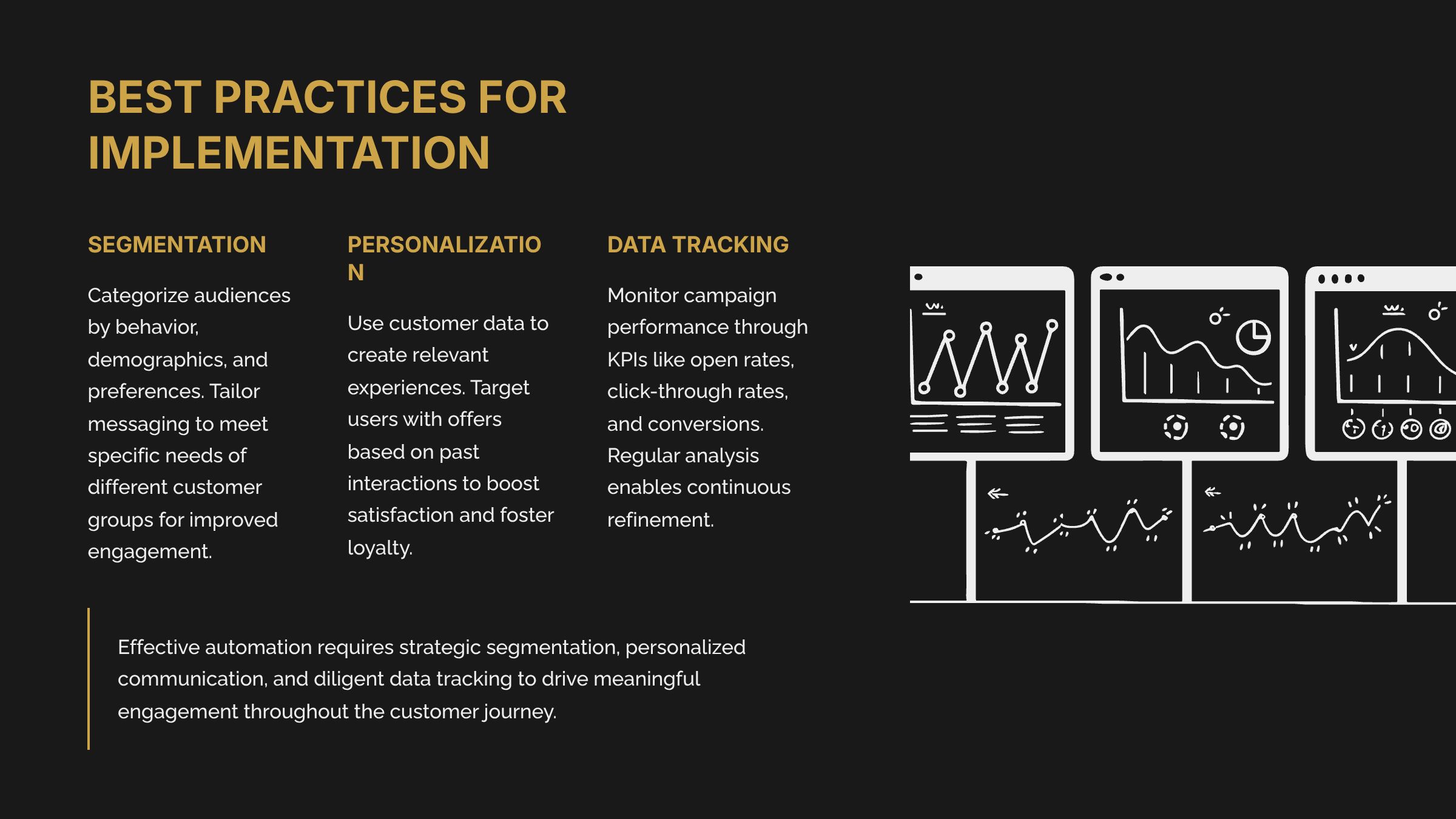
To achieve optimal results from marketing automation, businesses should adopt several best practices focused on segmentation, personalization, and data tracking. Effective segmentation is crucial, as it allows organizations to categorize their audience based on behavior, demographics, and preferences. By identifying key segments, businesses can tailor their messaging and campaigns to meet the specific needs of different customer groups, leading to improved engagement and conversion rates.
Personalization goes hand in hand with segmentation. Utilizing customer data to create personalized experiences enhances the relevance of communication, making customers feel valued. Automated systems can use personalized content, targeting users with relevant offers based on past interactions. This not only boosts customer satisfaction but also fosters loyalty.
Furthermore, robust data tracking mechanisms should be established to monitor the performance of automated campaigns. Regular analysis of key performance indicators (KPIs) allows businesses to understand the effectiveness of their strategies and make necessary adjustments. By assessing metrics such as open rates, click-through rates, and conversion rates, companies can gain insights to refine their automation efforts continually.
In summary, implementing marketing automation effectively requires a strategic approach that emphasizes segmentation, personalized communication, and diligent tracking of data. These best practices will ensure that organizations not only enhance efficiency but also drive meaningful engagement throughout the customer journey.
Measuring the Impact of Marketing Automation on Client Growth
Understanding the effectiveness of marketing automation is crucial for businesses aiming to enhance client growth. To measure the impact, companies should focus on tracking return on investment (ROI), analyzing performance metrics, and employing strategies for continuous optimization.
One of the primary methods of assessing ROI is by comparing the revenue generated from automated campaigns against the costs incurred during implementation. This analysis helps organizations identify which strategies yield the highest financial return. Key performance indicators (KPIs), such as click-through rates, conversion rates, and lead acquisition costs, provide valuable insights into the effectiveness of each campaign.
Furthermore, businesses can utilize analytics tools integrated within their marketing automation platforms to gather detailed performance metrics. These metrics allow marketers to evaluate how well their workflows are functioning and identify areas needing improvement. For instance, monitoring user engagement levels can reveal whether the content resonates with the target audience or if adjustments are necessary.
Additionally, continuous optimization of automated campaigns is essential for maintaining effectiveness. By routinely testing different approaches, such as A/B testing subject lines or adjusting send times, companies can refine their strategies to maximize client engagement and retention. Ultimately, the ability to measure and analyze the outcomes of marketing automation efforts empowers organizations to make data-driven decisions that foster sustainable client growth.
Conclusion
In conclusion, marketing automation stands as a transformative force in the landscape of modern marketing, bridging the gap between efficiency and effectiveness. By harnessing the power of advanced software platforms, businesses can automate essential tasks, from email outreach to social media management, thus saving valuable time and resources. This approach not only enhances operational workflows but also fosters stronger customer relationships through consistent and personalized engagement.
The ability to analyze user behavior through marketing automation tools allows companies to create tailored content that speaks directly to their audience's needs and preferences. As a result, businesses can significantly improve their conversion rates, turning leads into loyal customers. This trend highlights the importance of integrating marketing automation into overall marketing strategies for sustained growth.
Ultimately, understanding the role of marketing automation empowers organizations to optimize their marketing efforts and achieve scalable outcomes. As competition in the market intensifies, utilizing these tools is no longer a luxury but a necessity for businesses aiming to thrive. By prioritizing marketing automation, companies can ensure they not only keep pace with industry standards but also set themselves apart from competitors, paving the way for long-term success.
If you want to take what we talked about today and actually put it into action, then go download your free copy of Automation in Small Businesses. It’ll help you implement all of this without stress or confusion.
Download your free copy of Automation in Small Businesses
You don’t need another marketing agency making big promises. You need a partner who understands that sustainable business growth requires more than ads and content. It takes strategy, positioning, demand generation, sales enablement, automation, and customer retention—all working together in perfect sync.
6D FRAMEWORK
SERVICES
Subscribe to our newsletter
Get Smart, Actionable Growth Insights—Straight to Your Inbox. Proven strategies, expert tips, and real-world case studies to help you scale with clarity and control. No fluff. No spam. Just growth-focused insights you can actually use.