Brand positioning is a fundamental element of marketing strategy that plays a critical role in determining how a company is viewed in the minds of consumers. It goes beyond mere advertising; this process involves a careful analysis of market trends, competitive landscapes, and consumer behaviors. By establishing a distinct identity, brands can effectively communicate their unique values and benefits, thereby influencing purchasing decisions.
In a crowded marketplace, effective brand positioning serves as a beacon for potential customers, guiding them towards a choice that feels right for their needs. The interplay of emotional resonance and strategic messaging in brand positioning encourages not just initial sales, but also fosters customer loyalty and long-term engagement. Brands that excel in this area are adept at weaving their core values into every aspect of their customer journey, creating a seamless experience that nurtures relationships over time.
Furthermore, in an age where consumer preferences rapidly evolve, companies must remain agile. This means regularly revisiting and refining brand positioning strategies to ensure alignment with both market conditions and consumer expectations. Ultimately, understanding brand positioning is crucial for any organization aspiring to achieve sustainable growth and maintain a competitive edge in an ever-changing business landscape. As the following sections will explore, the implications of brand positioning extend far beyond mere visibility, impacting various facets of business performance and success.
And if you stay with me until the end, I’ve got a free gift for you that will help you tighten up your positioning and build a brand that people instantly trust. It’s an incredible resource called Building a Powerful Brand — and I’ll tell you how to get it at the end.
Understanding Brand Positioning and Its Role in Business Growth
Brand positioning is a strategic process that defines how a brand is perceived in the marketplace relative to competitors. This concept plays a pivotal role in shaping customer perception, as it establishes a unique identity that resonates with the target audience. Effective brand positioning informs customers why they should choose one brand over another, creating a competitive advantage that can lead to increased market share.
By articulating a clear value proposition, companies can communicate their benefits and attributes effectively. A well-positioned brand not only captures attention but also forges emotional connections with consumers, encouraging loyalty and repeat business. Understanding the nuances of brand positioning enables businesses to navigate complex market dynamics, adapt to consumer needs, and ultimately foster business growth.
Key aspects include identifying the target market, analyzing competitors, and ensuring that the branding aligns with customer expectations. As the marketplace evolves, brands must continuously evaluate their positioning strategies to remain relevant. This adaptability is crucial for sustaining customer relationships and driving long-term success. In conclusion, brand positioning is much more than a marketing tool; it is an essential framework for building a resilient business that thrives amidst competition.
Key Elements of Effective Brand Positioning Strategy
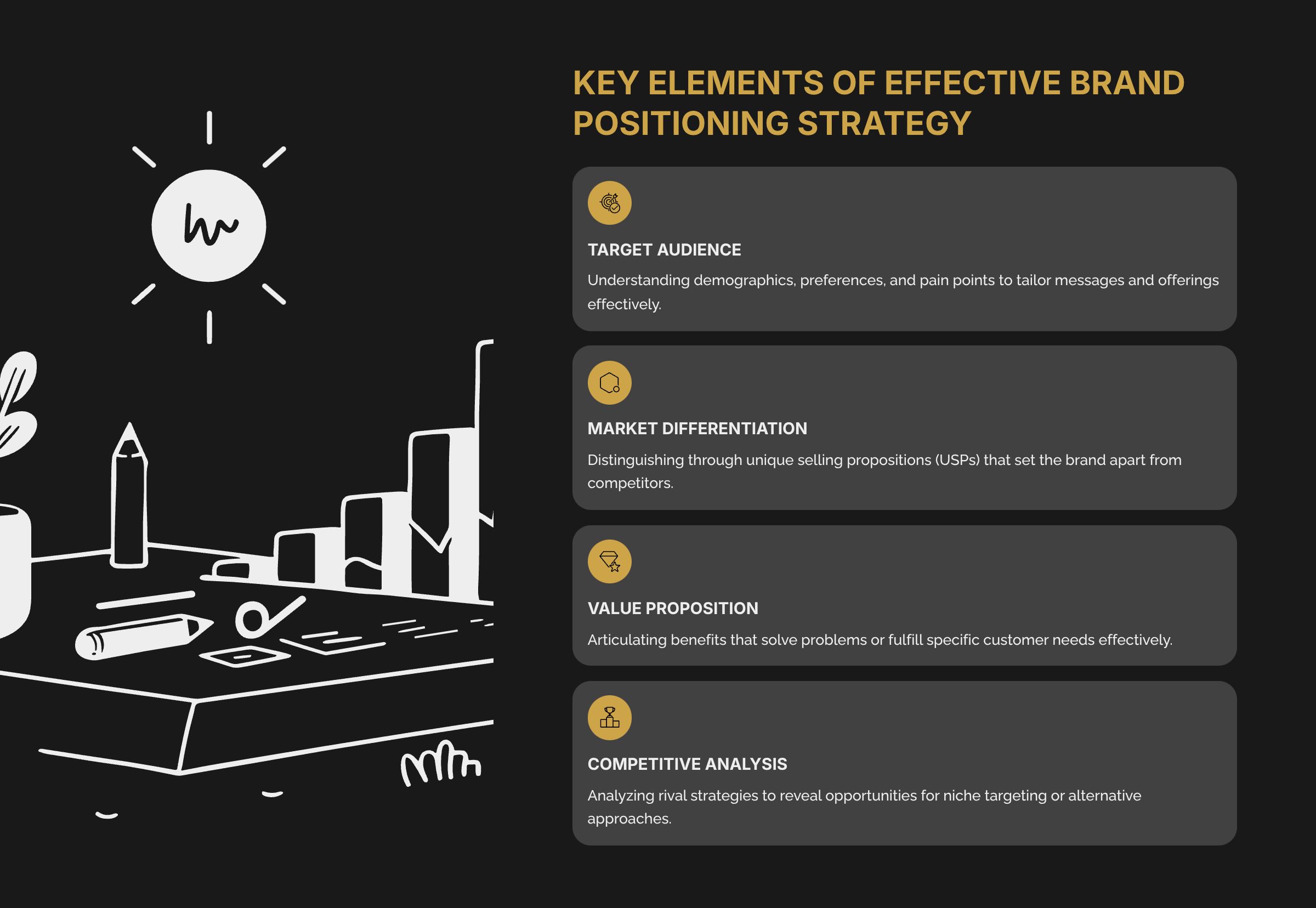
Effective brand positioning relies on several key elements that together create a strong foundation for a brand in today’s competitive landscape. Firstly, identifying the target audience is crucial. Understanding the demographics, preferences, and pain points of potential customers allows brands to tailor their messages and offerings effectively. Secondly, market differentiation plays a pivotal role in standing out among competitors. Brands must distinguish themselves through unique selling propositions (USPs), showcasing attributes that set them apart in the marketplace.
Another essential component is the value proposition, which articulates the benefits that a brand delivers to its customers. A compelling value proposition communicates how the brand solves problems or fulfills specific needs, thereby enhancing its relevance and appeal. Additionally, companies should consider their brand personality, as this shapes consumer perceptions and emotional connections.
Positioning should also take into account the competitive environment. Analyzing the positioning strategies of rivals can reveal opportunities for niche targeting or alternative approaches. Finally, ongoing evaluation and adjustment of these elements are necessary to stay aligned with evolving market trends and consumer expectations. By prioritizing these components—target audience, market differentiation, value proposition, and competitive analysis—businesses can establish a well-rounded brand positioning strategy that supports long-term growth and customer loyalty.
Proven Frameworks for Crafting Powerful Brand Positioning
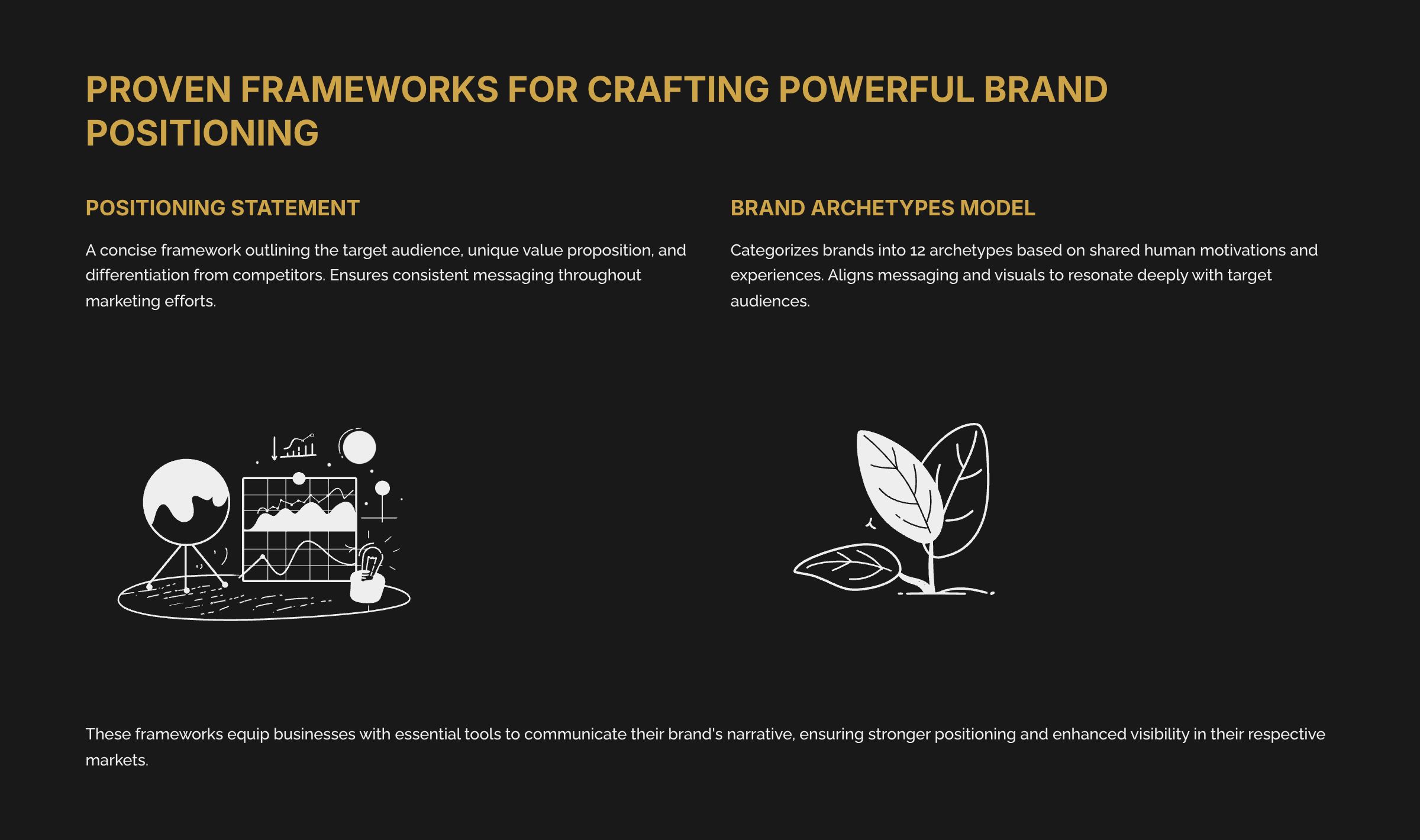
To develop an effective brand positioning strategy, businesses can utilize proven frameworks that provide structure and clarity. One widely recognized tool is the Positioning Statement. This concise framework outlines the target audience, the brand's unique value proposition, and the differentiation from competitors. By articulating these elements clearly, organizations can effectively communicate their brand essence and ensure consistent messaging throughout their marketing efforts.
Another valuable framework is the Brand Archetypes model, which categorizes brands into 12 archetypes based on shared human motivations and experiences. By identifying their brand archetype, organizations can align their messaging and visuals to resonate more deeply with their target audience. This approach not only fosters emotional connections but also enhances brand loyalty.
Employing these frameworks allows businesses to craft powerful and concise messages that articulate their unique value in a crowded marketplace. Furthermore, these structures encourage companies to think critically about their audience and their distinct offerings. With the right frameworks in place, organizations can effectively navigate their positioning strategy, ultimately leading to enhanced visibility, customer engagement, and long-term brand success.
In summary, utilizing the Positioning Statement and Brand Archetypes frameworks equips businesses with essential tools to communicate their brand’s narrative, thereby ensuring a stronger positioning in their respective markets.
Aligning Brand Messaging for Clarity and Consistency
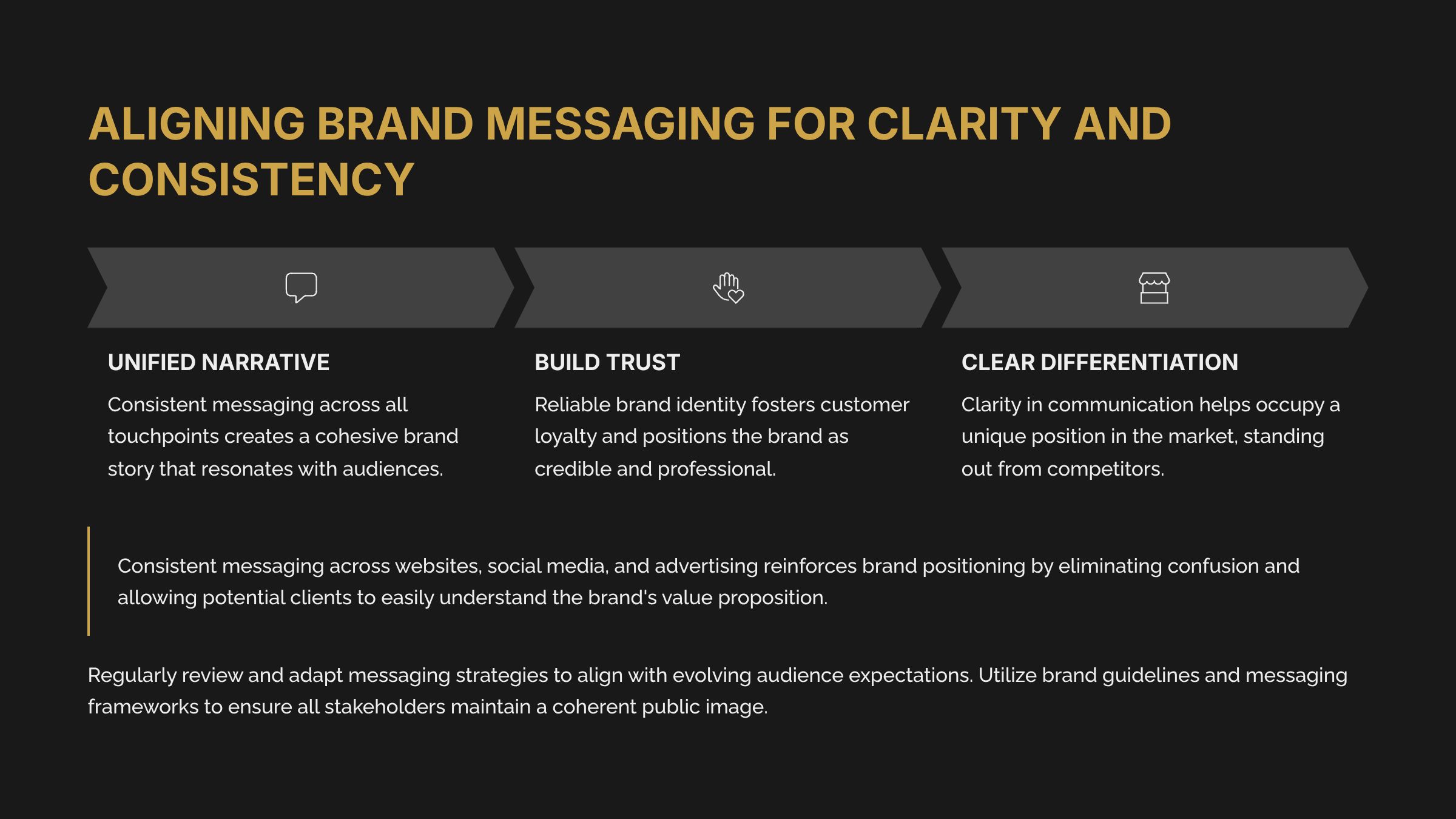
In the realm of brand positioning, aligning brand messaging is crucial for ensuring clarity and consistency. Consistent messaging across all customer touchpoints—such as websites, social media, and advertising—reinforces brand positioning by creating a unified narrative that resonates with the target audience. This unified approach helps eliminate confusion, allowing potential clients to easily understand the brand's value proposition.
Employing consistent messaging promotes a reliable brand identity, which ultimately builds trust and fosters customer loyalty. When consumers encounter the same brand voice and core messages, they are more likely to perceive the brand as credible and professional. Additionally, clarity in communication helps to differentiate the brand from competitors, allowing it to occupy a unique position in the market.
It is essential for businesses to regularly review and adapt their messaging strategies to ensure that they align with the evolving expectations of their audience. By maintaining consistent yet flexible messaging, brands can effectively respond to changes in market dynamics and consumer preferences. Utilizing tools such as brand guidelines and messaging frameworks can facilitate this process, ensuring that all stakeholders are on the same page.
Overall, aligning brand messaging is a fundamental aspect of brand positioning that not only aids in maintaining a coherent public image but also strengthens relationships with prospective clients, ultimately driving business growth.
Building Authority to Strengthen Brand Positioning
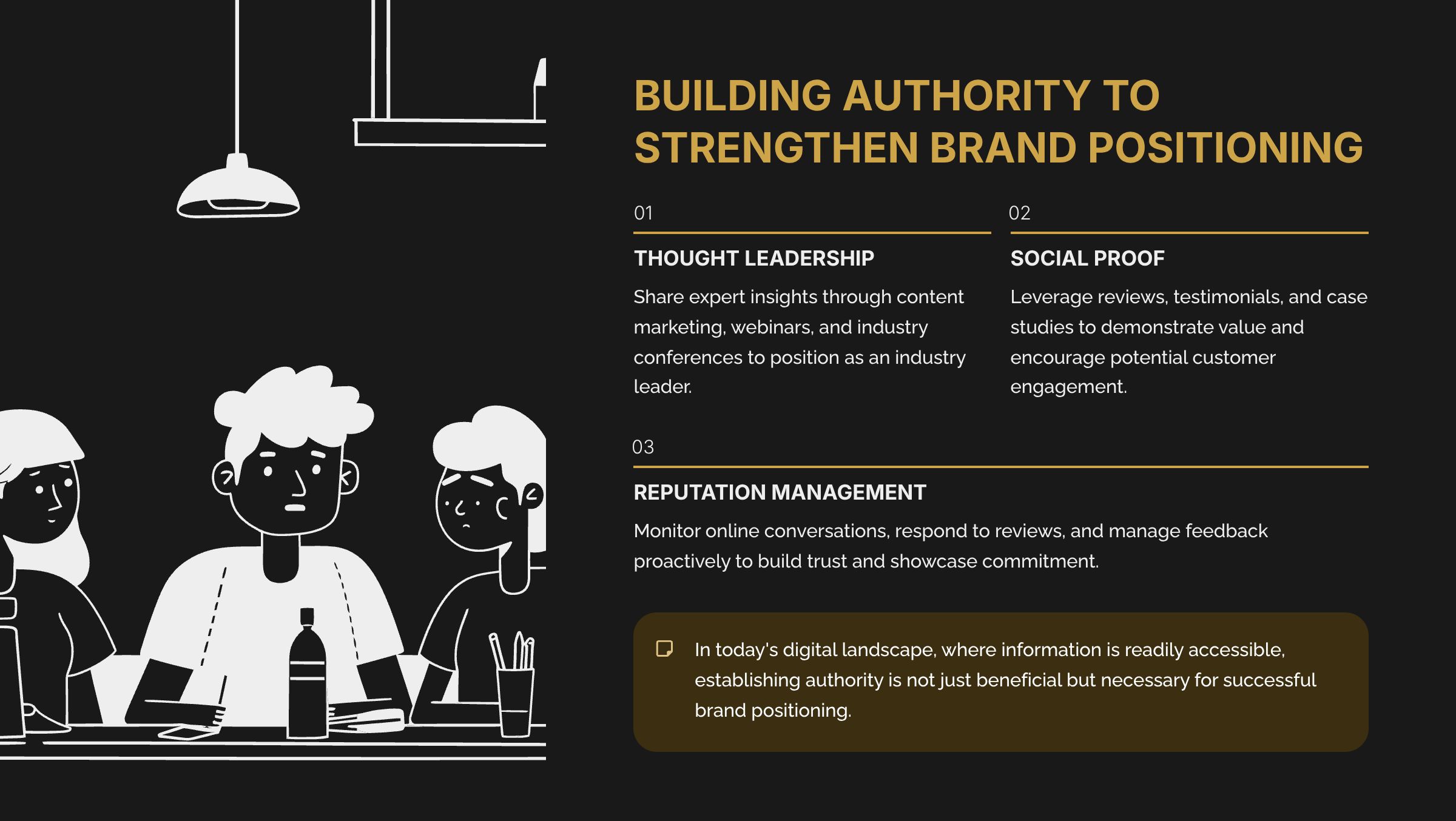
Establishing authority is crucial for effective brand positioning, as it enhances credibility and fosters trust among target audiences. Thought leadership is one of the most powerful tools in this context. By sharing expert insights, brands can position themselves as industry leaders, thereby influencing customer perceptions and decisions. This can be achieved through content marketing, webinars, and participation in industry conferences.
Additionally, social proof plays a significant role in reinforcing brand authority. Reviews, testimonials, and case studies can demonstrate a brand’s value and effectiveness, encouraging potential customers to engage. Positive feedback from satisfied clients creates a ripple effect, enhancing the brand's reputation within its market.
Reputation management is also essential for sustaining a credible brand image. Companies should monitor online conversations, respond to reviews, and manage any negative feedback proactively. This transparency not only builds trust but also showcases a commitment to customer satisfaction.
By integrating thought leadership, social proof, and robust reputation management strategies, businesses can effectively strengthen their brand positioning. This approach not only differentiates them from competitors but also enhances their overall market presence, contributing to long-term growth. In today’s digital landscape, where information is readily accessible, establishing authority is not just beneficial but necessary for successful brand positioning.
Evaluating and Adapting Your Brand Positioning Over Time
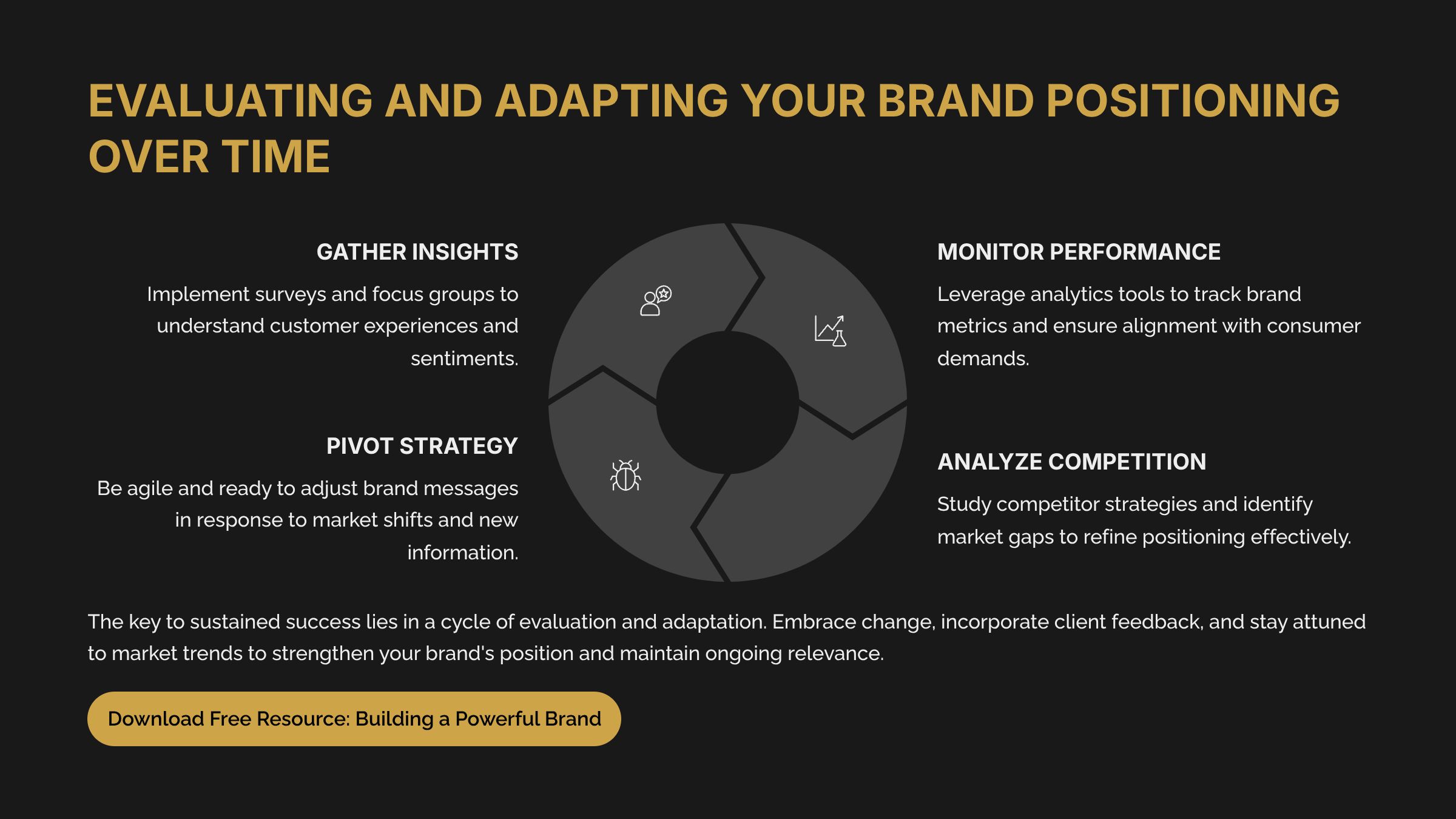
To maintain a competitive edge, businesses must regularly evaluate and adapt their brand positioning strategies. Changes in market dynamics, customer preferences, and emerging trends necessitate ongoing scrutiny of brand perception. Companies should implement systematic feedback mechanisms, such as surveys and focus groups, to gather insights about customer experiences and sentiments. Additionally, leveraging analytics tools can help organizations monitor brand performance metrics, ensuring alignment with evolving consumer demands.
Failing to adapt can lead to a disconnect between the brand and its audience, hampering the ability to resonate emotionally with potential clients. Therefore, businesses must be agile, ready to pivot their brand messages and offerings in response to new information or shifts in the marketplace.
Furthermore, understanding competitive developments is crucial in this evaluation process. By analyzing competitor strategies and identifying gaps in the market, brands can refine their positioning to highlight unique selling propositions effectively. This proactive approach not only enhances brand visibility but also fosters consumer loyalty.
Ultimately, the key to sustained success in brand positioning lies in a cycle of evaluation and adaptation. Embracing change, incorporating client feedback, and staying attuned to market trends are essential practices for strengthening a brand’s position within its industry. Regularly revisiting and reshaping the brand narrative ensures ongoing relevance and establishes a connection that resonates with target audiences over time.
And this is exactly why I want you to grab the free resource I mentioned earlier — Building a Powerful Brand — because it goes deeper into how to shape the perception your audience has of you and how to communicate your unique advantage in a way that sticks. This ebook is one of the most useful tools you can have if you want to strengthen your brand and show up with clarity and confidence. You’ll find the form to download it for free at the bottom of this article.
Conclusion
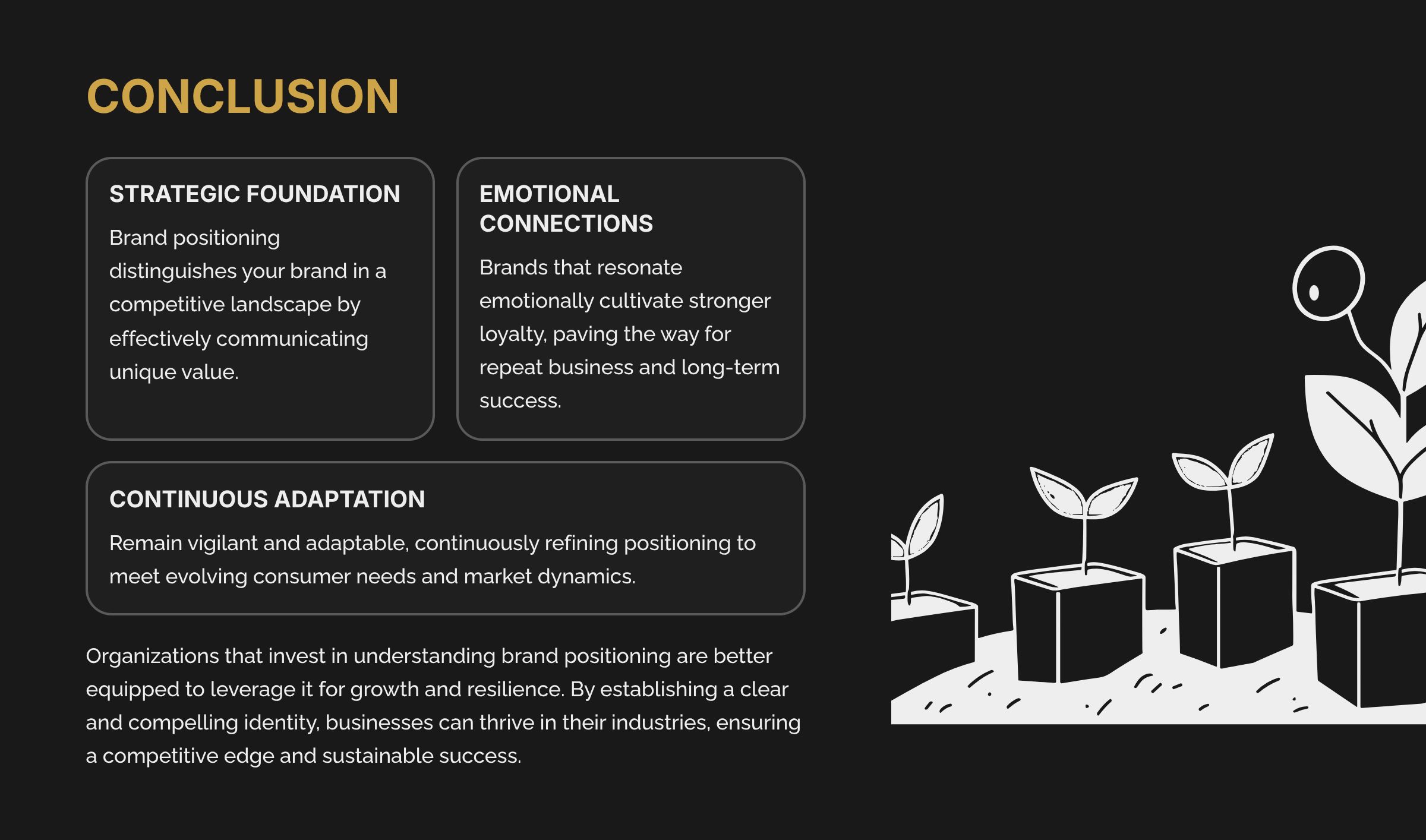
In summary, brand positioning emerges as a fundamental component of business strategy, serving to distinguish a brand in an increasingly competitive landscape. By effectively communicating its unique value proposition, a brand can not only attract but also retain customers, fortifying its market presence. As highlighted in the article, understanding how to analyze competitors and align branding with customer expectations is crucial for sustained relevance and engagement.
Moreover, the importance of emotional connections cannot be overstated; brands that resonate emotionally with their audience cultivate stronger loyalty, paving the way for repeat business and long-term success. The dynamic nature of the market necessitates that brands remain vigilant and adaptable, continuously refining their positioning to meet evolving consumer needs.
Ultimately, those organizations that invest in understanding the intricacies of brand positioning are better equipped to leverage it for growth and resilience. By establishing a clear and compelling identity, businesses can not only survive but thrive in their respective industries. This strategic approach not only enhances brand visibility but also solidifies a brand’s place in the minds of consumers, ensuring a competitive edge in the marketplace. In essence, mastering brand positioning is pivotal for any business aspiring to achieve sustainable growth and enduring success.
You don’t need another marketing agency making big promises. You need a partner who understands that sustainable business growth requires more than ads and content. It takes strategy, positioning, demand generation, sales enablement, automation, and customer retention—all working together in perfect sync.
6D FRAMEWORK
SERVICES
Subscribe to our newsletter
Get Smart, Actionable Growth Insights—Straight to Your Inbox. Proven strategies, expert tips, and real-world case studies to help you scale with clarity and control. No fluff. No spam. Just growth-focused insights you can actually use.