Proven Strategies for Business Growth and Faster Scaling
November 27, 2025
Introduction
In the dynamic landscape of entrepreneurship, businesses embark on a journey through various stages of growth, each presenting unique challenges and opportunities. Understanding these phases—specifically the startup, growth, and scaling stages—is vital for entrepreneurs and business leaders aiming to navigate their paths effectively. The initial phase, often marked by innovation and experimentation, requires a laser focus on market fit and product viability. As companies transition into the growth stage, the emphasis shifts to expanding their customer base and optimizing operational efficiency.
This complexity grows further during the scaling phase, where businesses must implement robust systems to sustain their rapid expansion and ensure predictable outcomes. By comprehending these stages, businesses are better equipped to identify their current position within the lifecycle, enabling them to anticipate challenges and strategically plan for the future. Moreover, this understanding empowers leaders to make informed decisions that not only drive immediate results but also foster resilience in an ever-changing market environment. Thus, an in-depth exploration of the stages of business growth paves the way for actionable insights and enhanced strategic planning, positioning businesses for lasting success. This article delves into each stage, providing invaluable guidance for those looking to thrive in the complex world of business.
And make sure you stay with me until the end, because I’m going to give you a free downloadable resource that shows you how to turn chaos into structure, so your business can grow without depending on you for every single decision.
Understanding the Stages of Business Growth
Businesses typically progress through several distinct phases, each characterized by unique challenges and opportunities. Understanding these stages is crucial for effective strategic planning.
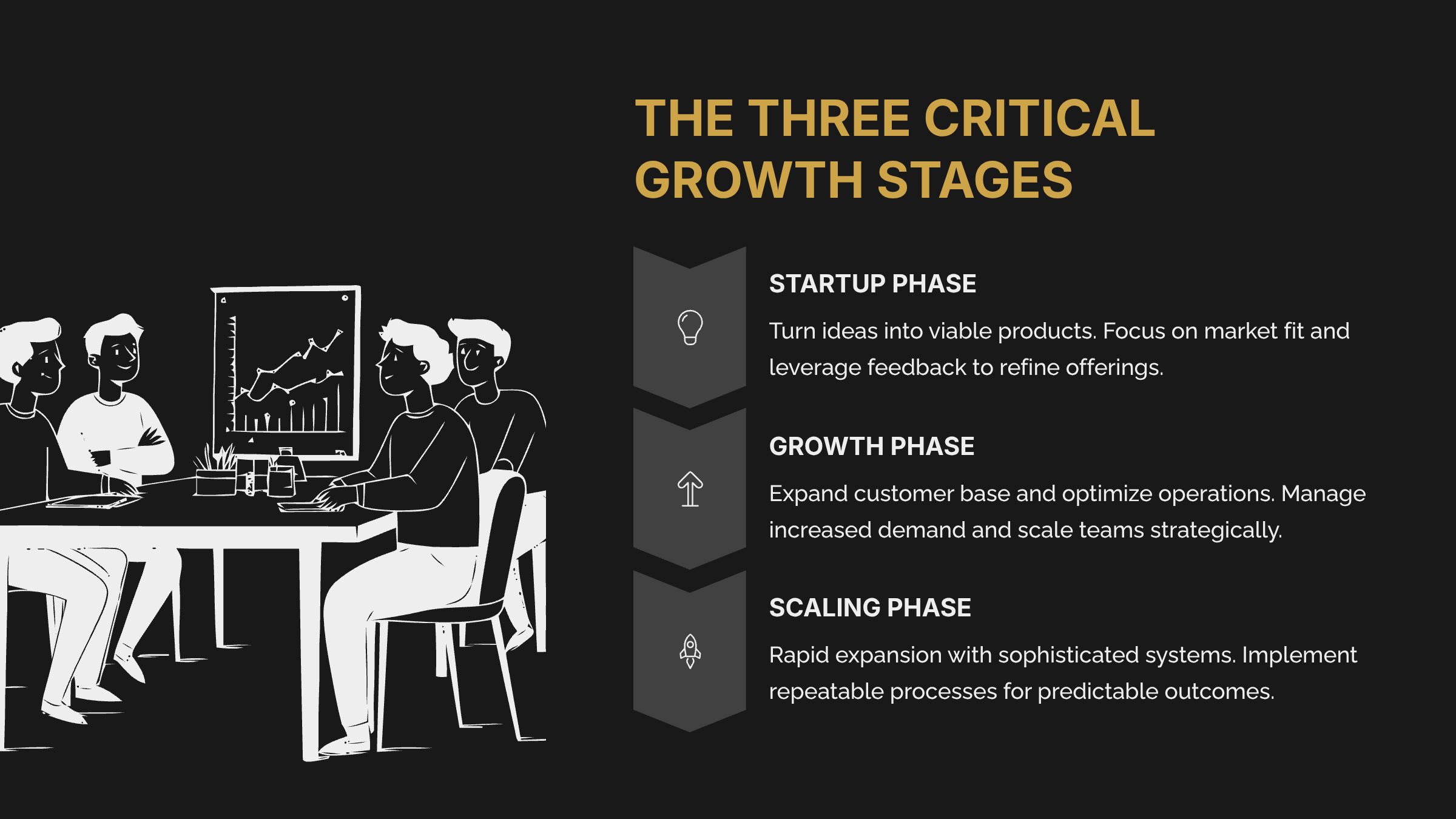
The journey begins with the startup phase, where entrepreneurs focus on turning ideas into viable products or services. During this time, market fit is paramount, and businesses must leverage feedback to refine their offerings. As they gain traction, companies transition into the growth phase, where expanding their customer base and optimizing operations becomes essential.
In this stage, recognizing the complexities that arise, such as managing increased demand and scaling teams, is critical. Businesses often experience a surge in resources, both financial and human, which requires strategic alignment to maintain momentum.
Next, the scaling phase allows for rapid expansion, but it necessitates the implementation of sophisticated systems to sustain growth. Companies must harness repeatable processes, which lay the groundwork for predictable outcomes.
By understanding these stages—startup, growth, and scale—businesses can identify their current position and anticipate the challenges that lie ahead. This knowledge not only helps in crafting actionable strategies but also empowers leaders to make informed decisions that foster resilience and adaptability in an ever-evolving market landscape. Recognizing the key indicators at each stage ultimately supports strategic planning and positions businesses for long-term success.
Why Hustle Alone Limits Business Growth
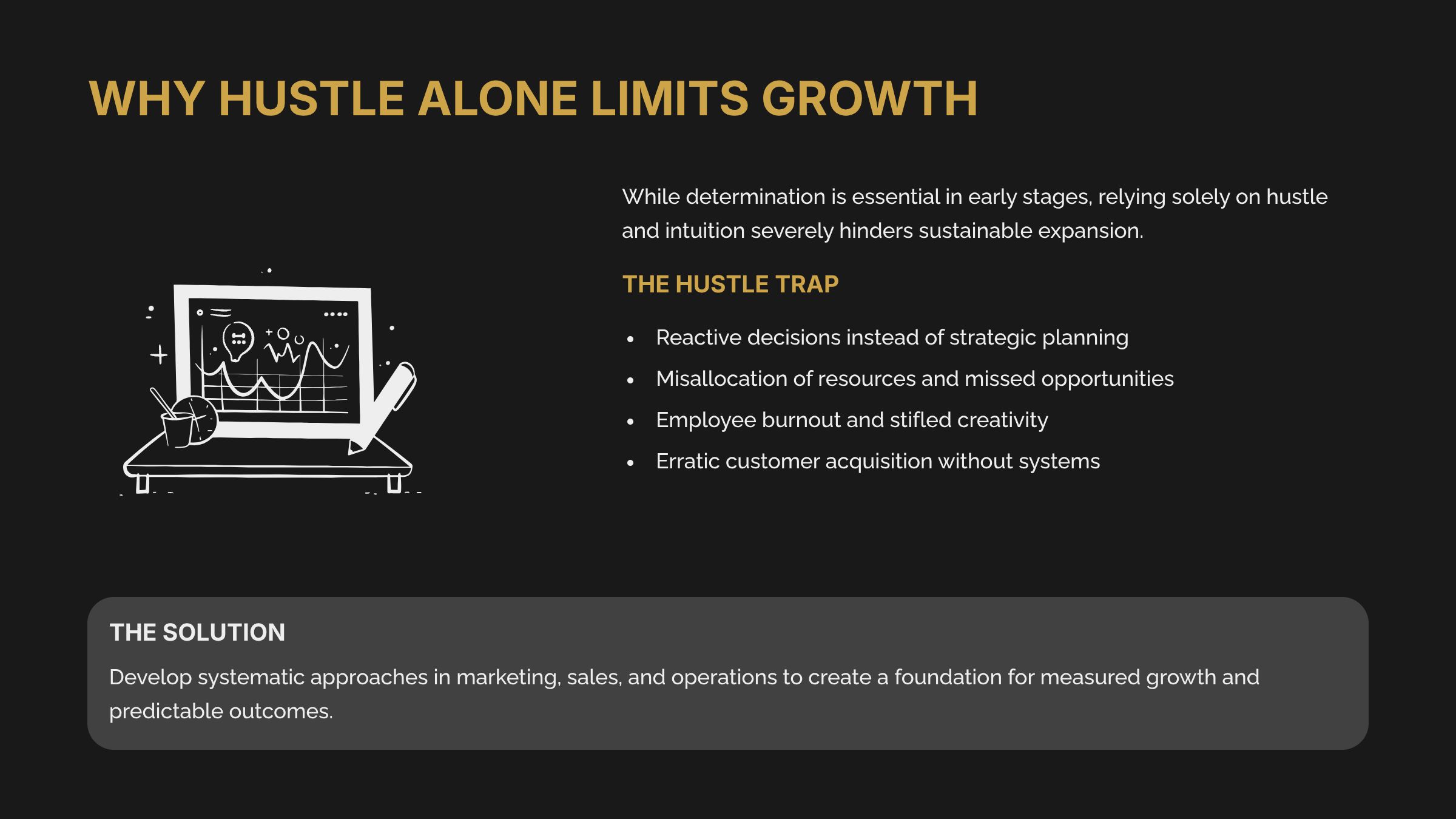
Relying solely on hustle and intuition can severely hinder a business's growth trajectory. While determination and hard work are essential in the early stages of a startup, they are not sufficient for sustainable expansion. Businesses often encounter challenges when they depend exclusively on these traits, as they may overlook the necessity for repeatable systems that drive efficiency and scalability.
Without structured processes, companies risk becoming chaotic, where every decision is reactive rather than strategic. This unpredictability can lead to misallocation of resources and missed opportunities in the marketplace. For instance, without established marketing systems, customer acquisition can become erratic and inefficient, limiting growth potential.
Furthermore, an overemphasis on individual effort can lead to burnout among employees, fostering a culture that prioritizes hustle over innovation and collaboration. This mentality not only stifles creativity but can also create operational bottlenecks, where teams become stretched thin, ultimately impacting productivity.
To counteract these limitations, businesses should focus on developing systematic approaches in essential functions, such as marketing, sales, and operations. By integrating repeatable systems, organizations can create a foundation that allows for measured growth and predictable outcomes. In conclusion, moving beyond hustle to embrace structured systems is crucial for companies aiming for long-term success and scalability.
Common Growth Ceilings and Operational Bottlenecks
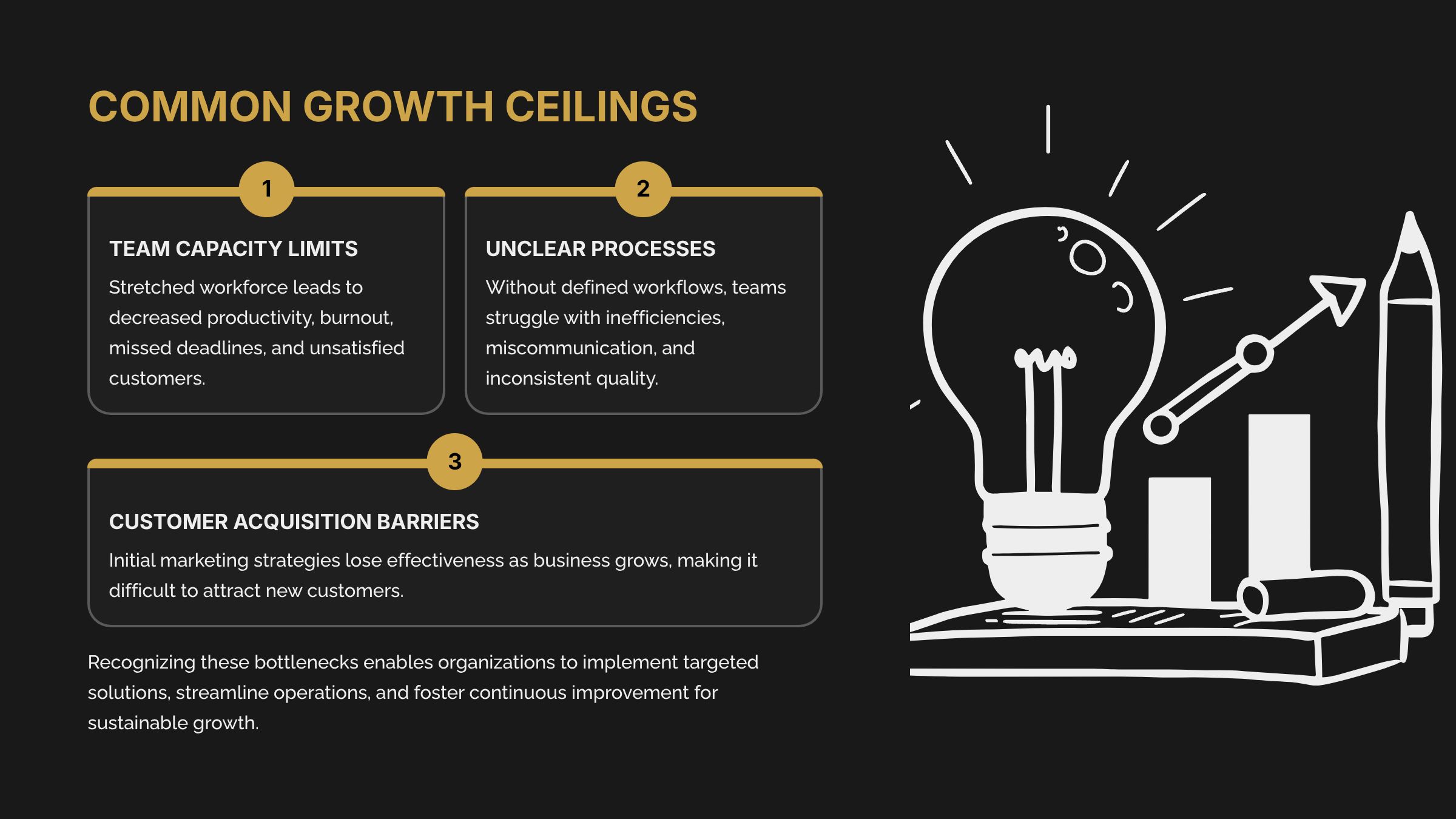
Identifying common growth ceilings and operational bottlenecks is crucial for any business aiming to scale effectively. As organizations expand, they often encounter significant obstacles that can hinder progress. One prevalent challenge is team capacity; when a company's workforce is stretched too thin, it can lead to decreased productivity and employee burnout. This scenario often results in missed deadlines and unsatisfied customers, which can stifle growth.
Another common issue is the lack of clear processes. Without well-defined workflows, teams may struggle with inefficiencies and miscommunication, causing delays in project completion. Moreover, unclear processes can lead to inconsistencies in product quality or customer service, undermining the company's reputation.
Customer acquisition limits also pose challenges. As a business grows, its initial marketing strategies may not yield the same results, leading to difficulties in attracting new customers. Utilizing effective digital marketing strategies and customer relationship management (CRM) tools can help address this bottleneck.
In summary, recognizing these growth ceilings and operational bottlenecks is essential for business leaders. Understanding the factors that constrain growth enables organizations to implement targeted solutions, streamline operations, and foster a culture focused on continuous improvement. By proactively addressing these challenges, businesses can position themselves for sustainable growth and success in an increasingly competitive landscape.
Implementing Scalable Systems for Sustainable Growth
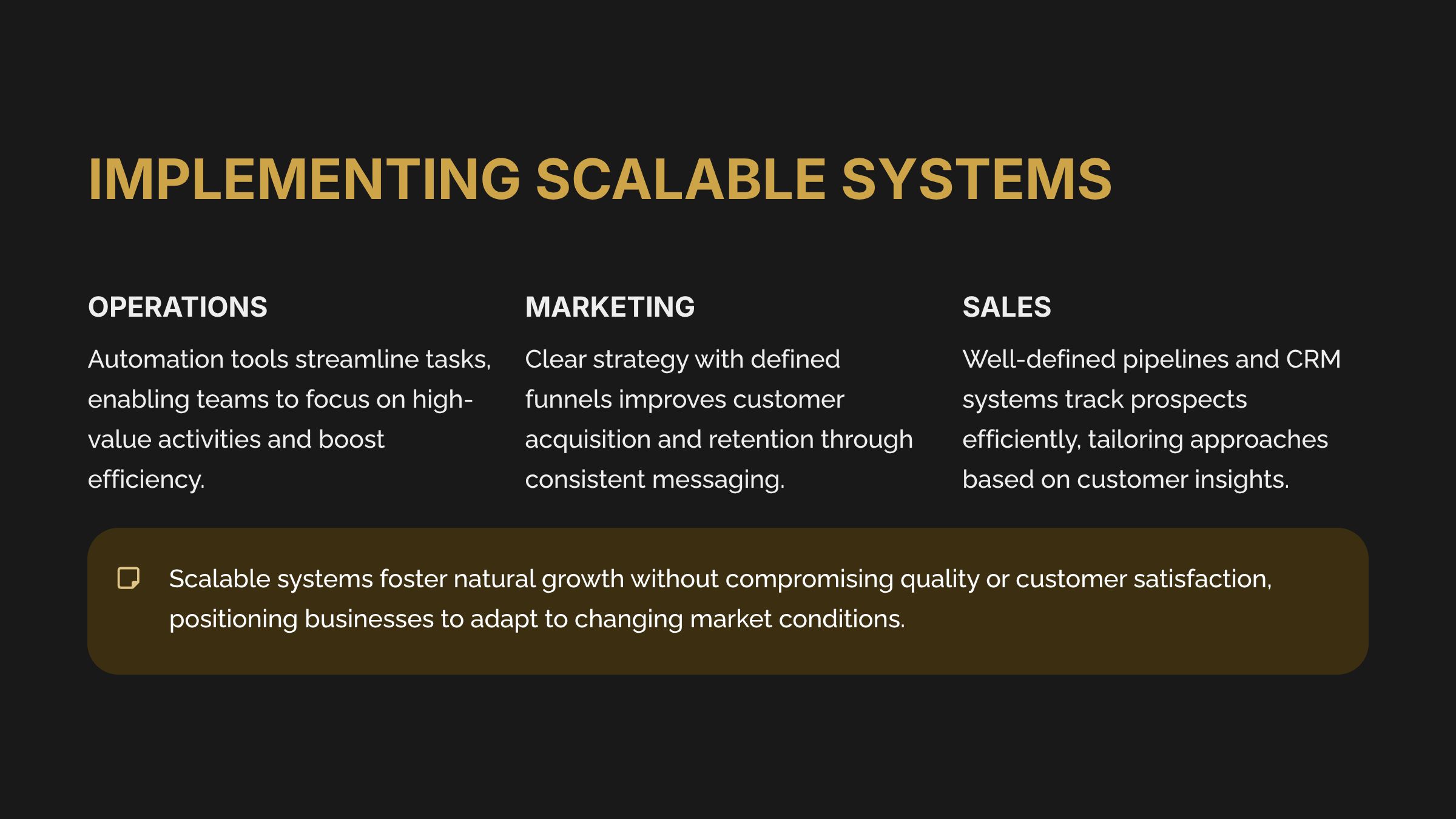
Creating scalable systems is essential for businesses seeking sustainable growth. Structured systems encompass various areas, including operations, marketing, and sales, ensuring that procedures are repeatable and effective. By implementing these systems, companies can achieve predictable outcomes, reducing the uncertainty that often accompanies expansion efforts.
In operational processes, for example, automation tools can streamline tasks, enabling teams to focus on high-value activities. This optimization not only boosts efficiency but also enhances productivity, providing a solid foundation for future growth. In marketing, establishing a clear strategy with defined funnels can lead to improved customer acquisition and retention rates. Consistency in messaging and targeting further supports a brand’s image and reaches potential clients effectively.
Sales systems, including well-defined pipelines, empower teams to track prospects and close deals more efficiently. By adopting a customer relationship management (CRM) system, businesses can gain insights into customer interactions and preferences, tailoring their approaches accordingly.
Overall, these scalable systems foster an environment where businesses can grow naturally without compromising quality or customer satisfaction. The integration of these structured systems thus plays a crucial role in supporting companies as they navigate the complexities of scaling, ultimately leading to long-term success. Businesses that prioritize the implementation of such systems will find themselves better equipped to adapt to changing market conditions and seize new opportunities for growth.
Aligning Team Roles and Leadership for Business Growth
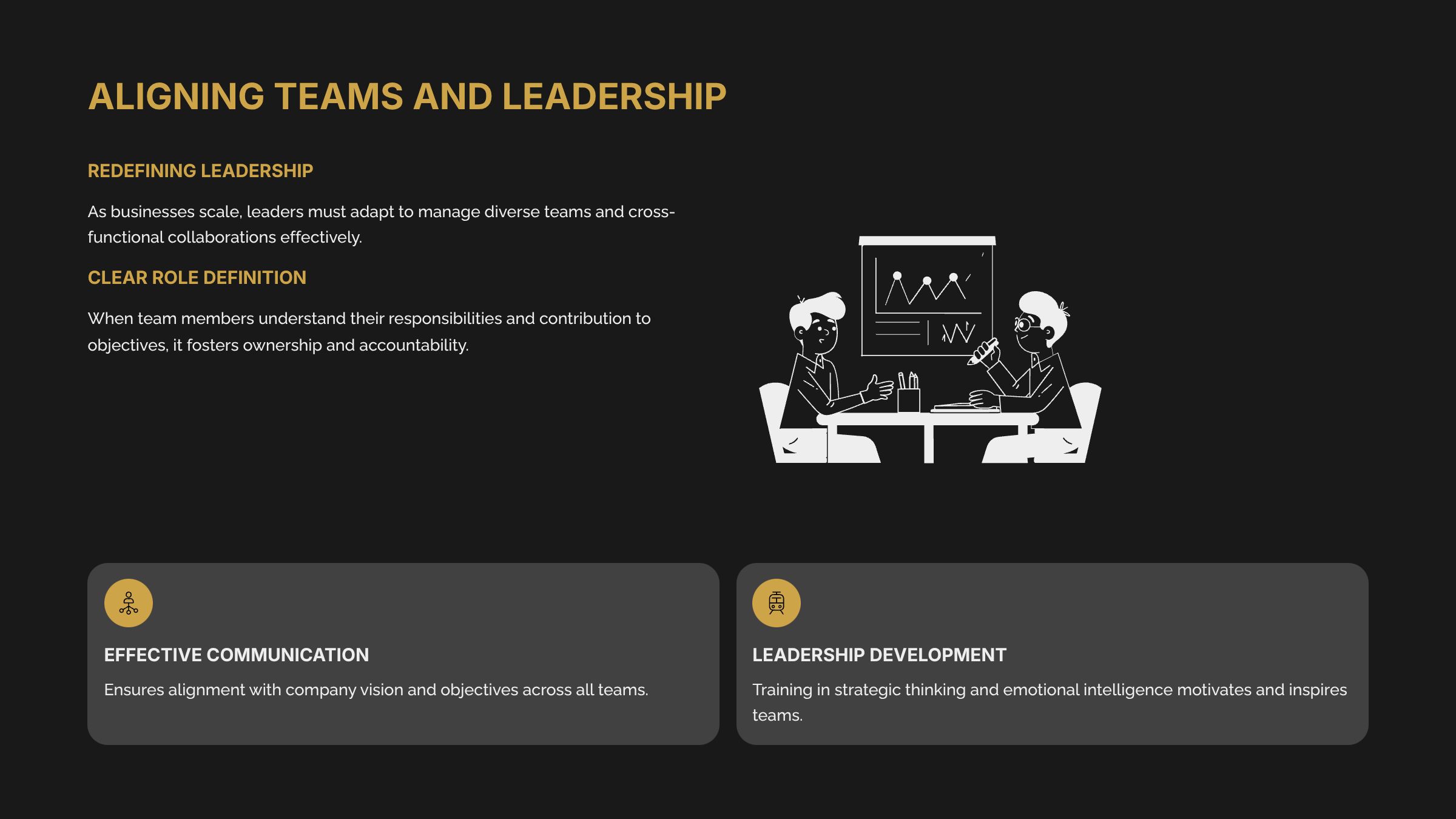
As businesses transition from early-stage startups to larger, more complex organizations, the alignment of team roles and leadership becomes critical to sustained growth. In this evolving environment, redefining leadership responsibilities ensures that leaders are equipped to manage diverse teams effectively. When a company scales, roles may shift, requiring leaders to adapt to new challenges, such as overseeing larger teams or managing cross-functional collaborations.
Clearly defining team roles contributes to improved operational efficiency and enhances employee satisfaction. When team members understand their responsibilities and how they contribute to overall business objectives, it fosters a sense of ownership and accountability. Moreover, effective communication among leaders and teams is essential for navigating the complexities that accompany growth. This ensures that everyone is aligned with the company's vision and objectives.
Investing in leadership development is equally important during this phase. As organizations grow, leaders must cultivate skills that encourage collaboration, innovation, and adaptability. Training programs focused on strategic thinking and emotional intelligence can enhance a leader's ability to motivate and inspire their teams.
In summary, aligning team roles and redefining leadership structures play a pivotal role in managing the complexities associated with business growth. By fostering a well-defined organizational strategy, businesses can better navigate challenges, enhance productivity, and drive sustainable success.
Using Data and KPIs to Drive Strategic Growth Decisions
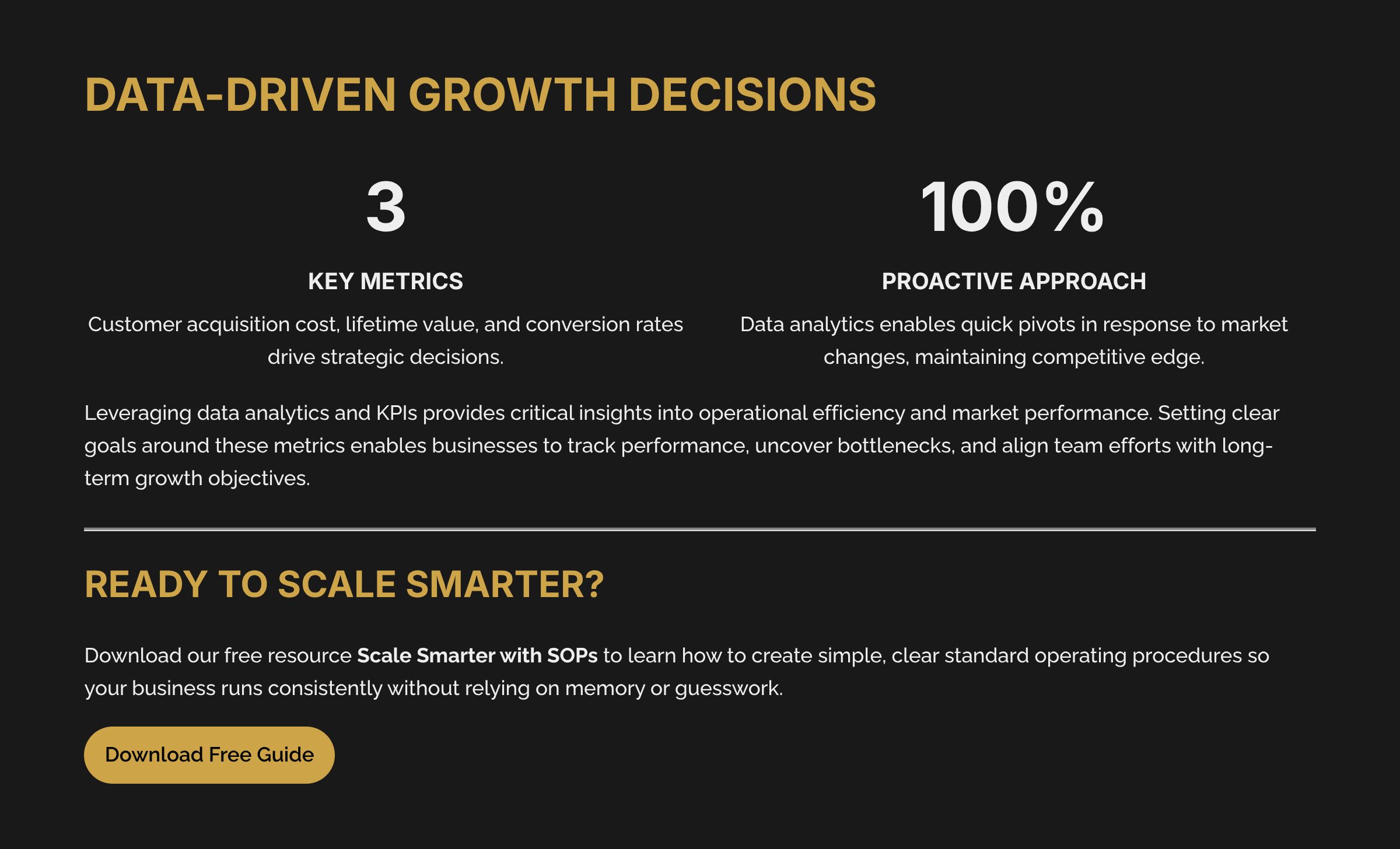
To facilitate informed decisions and effectively measure growth, businesses must leverage data analytics and key performance indicators (KPIs). These tools provide critical insights into a company's operational efficiency and market performance, allowing for informed strategic adjustments. By analyzing data trends, organizations can identify what drives customer behavior, optimize resource allocation, and fine-tune marketing strategies.
KPIs act as measurable values that indicate how well a company is achieving its business objectives. Commonly used metrics include customer acquisition cost, lifetime value, and conversion rates. Setting clear goals around these KPIs enables businesses to track performance over time, fostering a culture of continuous improvement.
Moreover, integrating data into decision-making encourages a proactive approach rather than a reactive one. Businesses that utilize analytics can pivot quickly in response to market changes, ensuring they remain competitive. Regularly reviewing KPIs also uncovers potential growth bottlenecks, highlighting areas that may require strategic interventions.
Ultimately, using data and KPIs not only streamlines operations but enhances collaboration among teams. When all members understand and track performance indicators, they can work together to align their efforts with the company’s long-term growth objectives. In conclusion, data-driven decision-making is an indispensable component of successful business growth strategies, providing a clear roadmap to navigate challenges and seize opportunities.
Conclusion
In conclusion, a comprehensive understanding of the stages of business growth is essential for any entrepreneur or business leader aspiring to achieve sustainable success. From the initial startup phase, where it is vital to establish market fit, to the critical growth phase focused on customer expansion and operational optimization, each stage presents unique challenges that require tailored strategies. As businesses enter the scaling phase, the need for sophisticated systems and repeatable processes becomes prominent to ensure continued momentum.
By grasping the intricacies of these phases, business leaders can effectively assess their current position and align their strategies with the anticipated challenges ahead. This proactive approach not only aids in strategic planning but also enhances resilience and adaptability in a dynamic market environment.
Ultimately, recognizing the key indicators at each stage allows businesses to navigate their growth journey with confidence, ensuring informed decision-making that drives long-term prosperity. By reflecting on the insights shared in this article, readers can foster a deeper understanding of how to guide their businesses through the transformative stages of growth, positioning themselves for sustained success and competitive advantage.
That’s why I want to give you a free downloadable resource called Scale Smarter with SOPs. It shows you how to create simple, clear standard operating procedures so your business can run consistently without relying on memory, guesswork, or constant supervision.
You don’t need another marketing agency making big promises. You need a partner who understands that sustainable business growth requires more than ads and content. It takes strategy, positioning, demand generation, sales enablement, automation, and customer retention—all working together in perfect sync.
6D FRAMEWORK
SERVICES
Subscribe to our newsletter
Get Smart, Actionable Growth Insights—Straight to Your Inbox. Proven strategies, expert tips, and real-world case studies to help you scale with clarity and control. No fluff. No spam. Just growth-focused insights you can actually use.